

Painting is a journey, not a destination. Whether you’re picking up a brush for the first time or refining years of technique, the path to improvement follows timeless principles that every artist—from hobbyists to professionals—must master. If you’ve ever felt stuck in your artistic progress or wondered why your paintings don’t quite match the vision in your head, you’re not alone. The good news? Improvement is absolutely achievable with the right approach.
In this guide, we explore seven proven strategies that will accelerate your painting development and unlock new dimensions of creative expression.
1. Master the Fundamentals First: Start Simple, Build Gradually
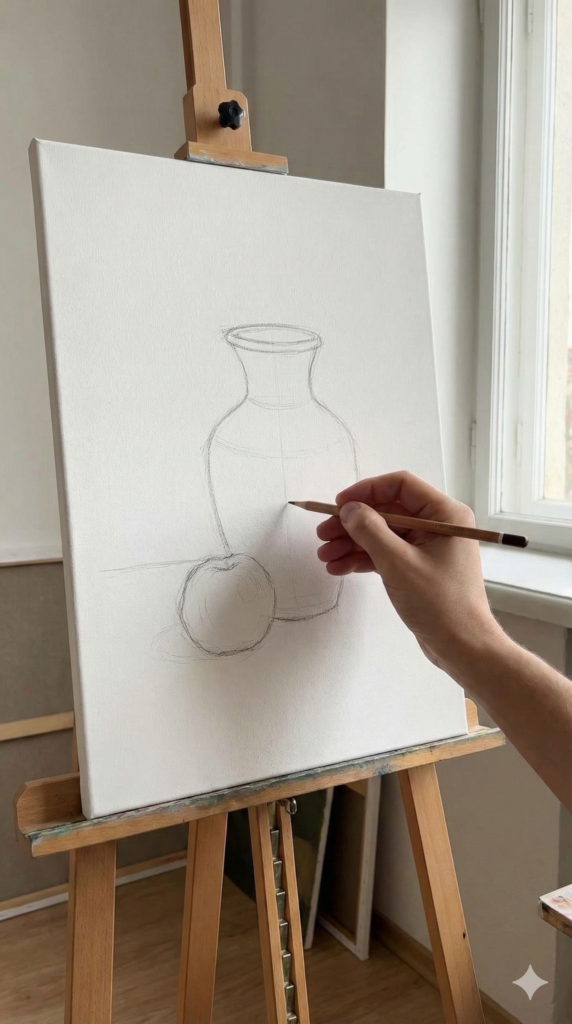
The most common mistake aspiring painters make is attempting complex subjects before mastering basic principles. Before you paint that dramatic landscape or intricate portrait, take a step back.
Why it matters: Simplicity is your greatest teacher. When you strip away complexity, you can focus entirely on one skill at a time—whether that’s understanding how light behaves, mixing colors accurately, or controlling your brushstrokes.
How to practice:
- Begin with simple still lifes: fruits, wooden blocks, basic geometric shapes
- Use a limited color palette (try painting in black and white first, then move to a three-color palette plus white)
- Paint the same subject multiple times under different lighting conditions (morning light, afternoon light, overcast, artificial light)
- Focus on understanding values—the relationship between light and dark—rather than intricate details
The payoff: This foundational work trains your eye and hand coordination more effectively than attempting complicated pieces. You’ll develop muscle memory, color intuition, and compositional sense that transfers to all future work.
2. Study Nature: Observe, Reference, and Sketch from Life
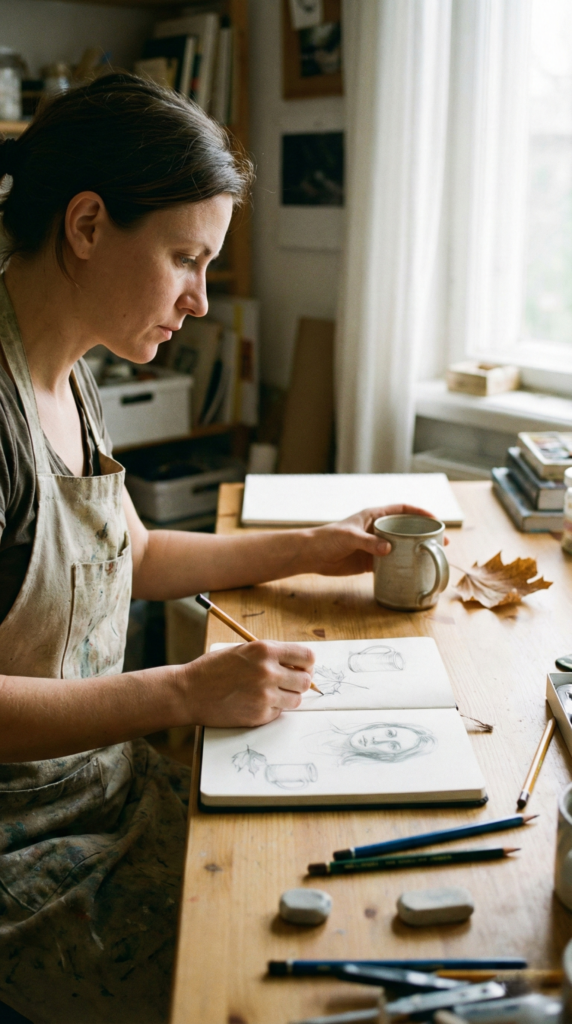
Nature is the ultimate teacher. Every color combination, light effect, and form exists in nature first. Your role as an artist is to study and interpret what you observe.
Why it matters: Painting from life (or from high-quality references) trains your brain to see accurately. You’ll notice subtle color shifts you’d never invent, understand how shadows actually work, and develop visual problem-solving skills that synthetic exercises can’t teach.
How to practice:
- Set up a simple still life with a desk lamp and sketch or paint the same object repeatedly
- Take reference photos during outdoor walks—capture interesting light, color combinations, and compositions
- Draw or paint the same scene at different times of day to understand how light transforms color
- Use colored wood blocks or simple household items as subjects; their clean forms help you master color behavior under light
The payoff: You’ll build an intuitive understanding of color, light, and form that makes your paintings feel authentic and compelling, even in abstract or stylized work.
3. Identify Your Weaknesses and Address Them Directly
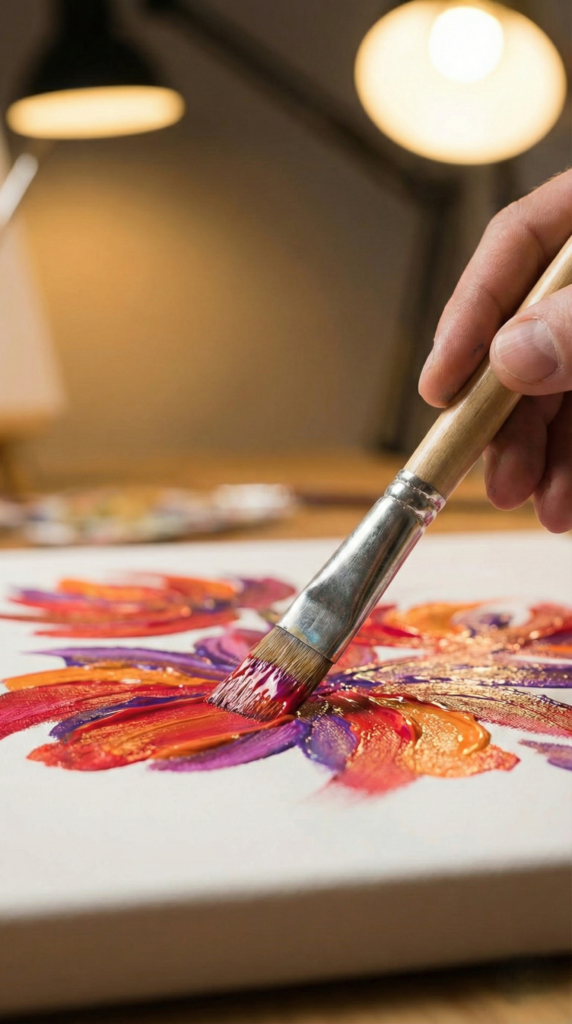
Every artist has blind spots. The difference between stagnating artists and continuously improving ones? The improved artists name their weaknesses and systematically work on them.
Why it matters: Painting practice without direction is like running on a treadmill—you’re moving, but you’re not going anywhere. Targeted practice accelerates improvement exponentially.
How to identify and address weaknesses:
- Paint a simple object and honestly evaluate it (or ask a trusted artist for feedback)
- Categorize the issue: Is it draftsmanship (form and proportion)? Color mixing and harmony? Perspective? Value relationships?
- Once identified, pursue targeted learning: take a focused course, work through structured exercises, or study artists who excel in that area
- Create a practice journal documenting the specific weakness and your progress over time
Examples of targeted practice:
- Struggle with color harmony? Create color studies mixing different combinations and matching paint chips
- Weak at drawing? Dedicate 10 minutes daily to gesture drawing or structural sketching
- Trouble with perspective? Study perspective theory and paint rooms, streets, and architectural elements
- Weak backgrounds? Paint background studies in isolation until they feel natural
The payoff: Within weeks of focused practice, you’ll see dramatic improvement in specific areas, which boosts confidence and motivation.
4. Practice Color Mixing: The Foundation of Painting Mastery
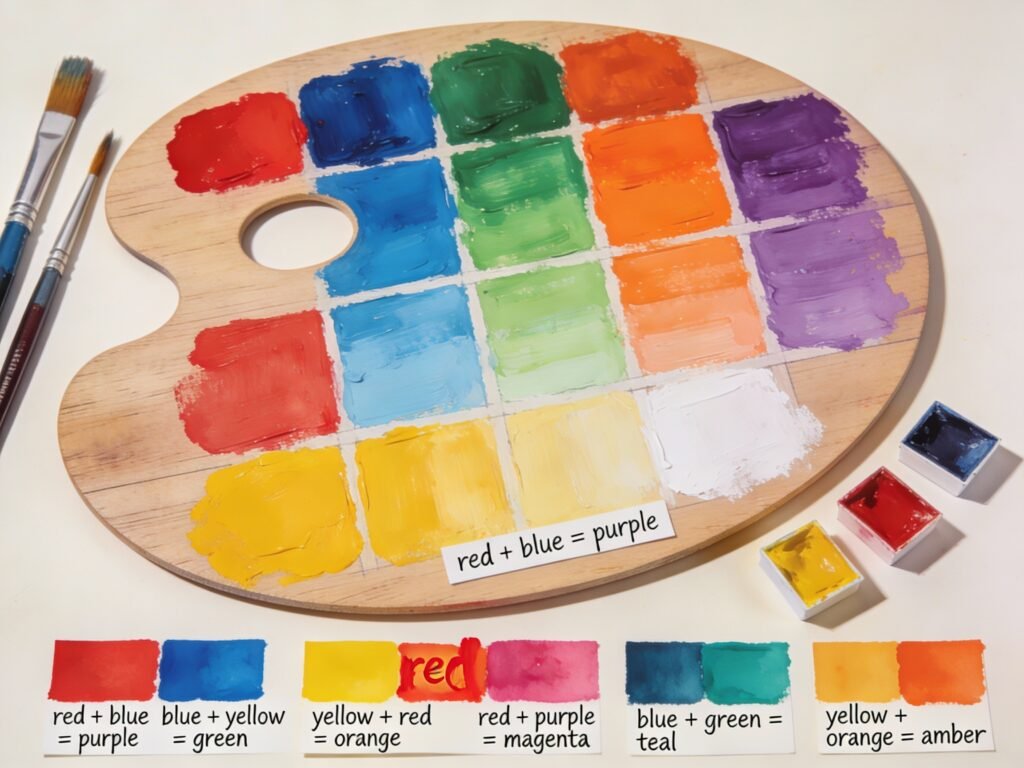
Color mixing is both science and intuition. Most painters underestimate how much time they need to invest here. Yet mastering color mixing transforms your paintings from muddy and dull to vibrant and harmonious.
Why it matters: You can have perfect technique, but if your colors don’t sing, your painting won’t. Color mixing is learnable—it’s not talent, it’s understanding.
How to practice:
- Color matching challenge: Take a paint chip from a hardware store and challenge yourself to match it exactly using your paints. Note the proportions of each color you used
- Limited palette exploration: Work with a restricted palette (three colors plus white) and discover how many variations you can create by mixing proportions
- Color study notebook: Collect color combinations you love from magazines, paintings, and nature. On one page, paste the reference color combination; on the opposite page, mix and document which paints created that combination
- Warm and cool exploration: For every color, learn its warm and cool variants. This transforms how you handle color temperature in lighting
Quick wins:
- Create a color mixing chart for your palette—systematically mix each color with every other color and document the results
- Practice making color transitions (gradients) from one color to another
- Learn to desaturate colors intentionally to create depth and distance
The payoff: Within a few weeks of consistent color mixing practice, you’ll stop fighting your paints and start collaborating with them confidently.
5. Embrace Value Studies: The Secret to Powerful Compositions
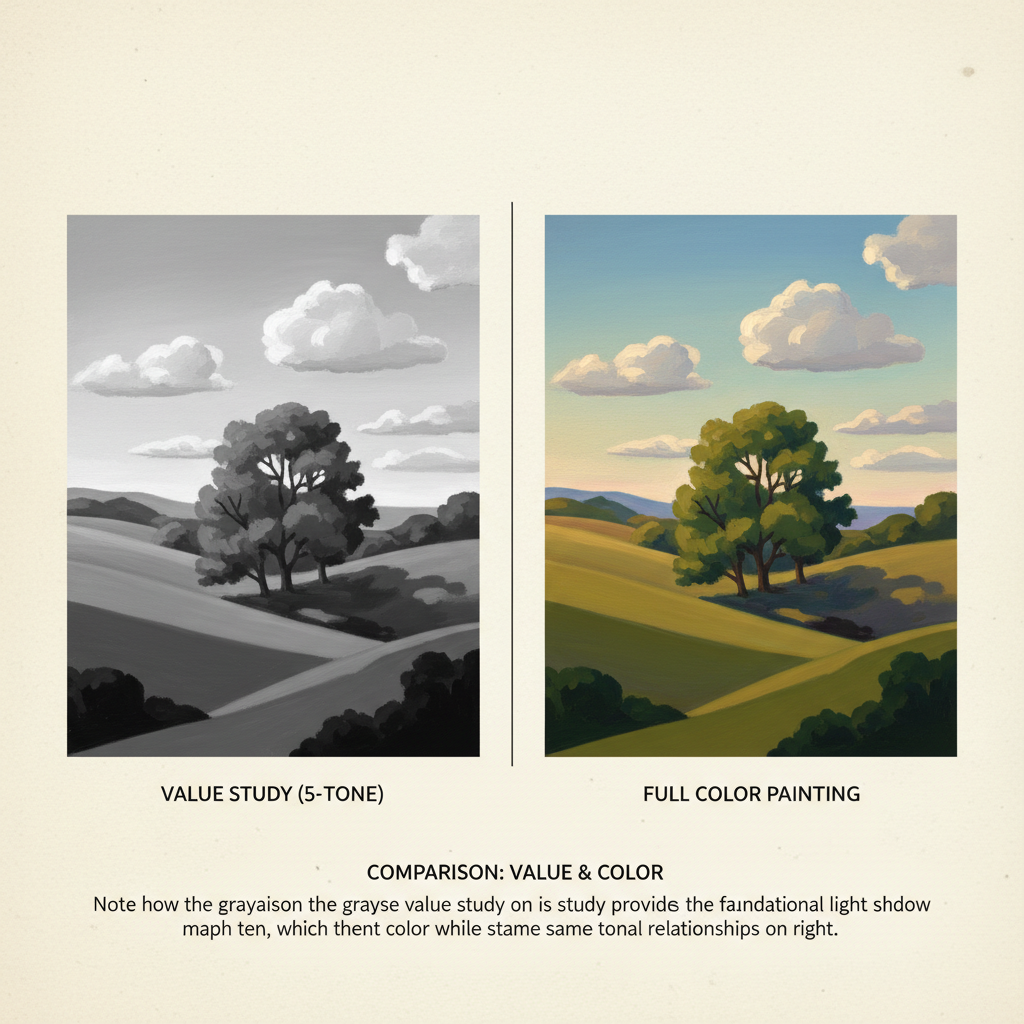
While color gets all the attention, value—the range from light to dark—is what makes paintings work or fail. A painting with perfect color but poor value relationships will always feel flat and weak.
Why it matters: Value creates the visual hierarchy that guides the viewer’s eye. Strong value contrast draws attention; subtle value shifts create depth and atmosphere. Learning to see and control values is one of the most transformative skills you can develop.
How to practice:
- Thumbnail value studies: Take small compositions (2″ x 3″) and paint them in grayscale only, focusing purely on light and dark relationships
- The five-value system: Simplify your thinking into five values: lightest light, light midtone, true midtone, dark midtone, and darkest dark. Paint using only these five values
- Value studies before full paintings: Before committing to a color painting, create a small black-and-white value study to confirm your composition works
- Compare with reference: Look at a photograph or painting you admire and squint to see only the values (ignore color entirely). Notice how the artist used contrast and subtlety
The payoff: Your paintings will feel more three-dimensional, compositions will naturally guide the viewer, and you’ll develop an artist’s eye for visual impact.
6. Study Master Painters: Learn Technique Through Observation
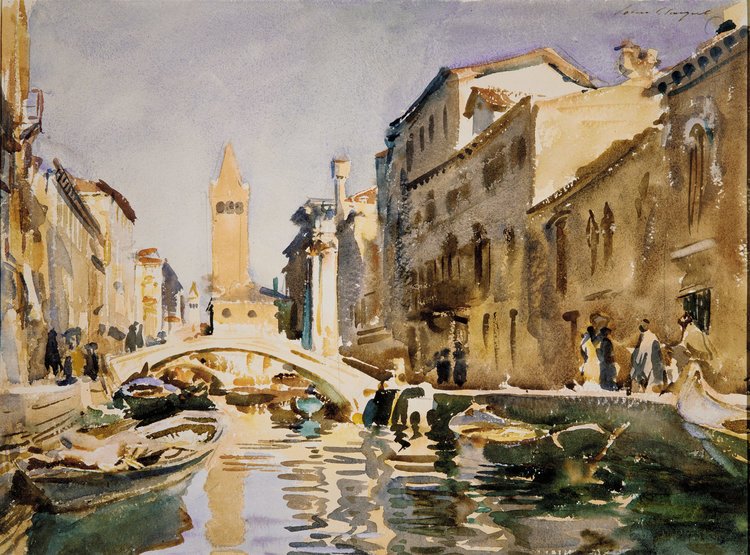
Every great painter studied those who came before. When you examine how master painters solved problems, you’re learning from centuries of accumulated knowledge.
Why it matters: Rather than reinventing solutions yourself, you can adapt proven approaches. You’ll notice techniques you didn’t know existed and develop new ideas for your own work.
How to practice:
- Technical analysis: Study a painting you love and ask: What colors did they use? What brushstrokes? How did they handle transitions? How did they use light?
- Technique reverse-engineering: Find an artist whose work you admire and try to understand their process. Look at their brushwork direction, their palette choices, their composition strategies
- Museum visits with intention: When visiting galleries, spend 5-10 minutes with specific paintings. Study them closely rather than rushing through
- Artist interviews and documentaries: Watch artists work and listen to their thought processes
- Sketch or paint studies after masters: Create your own versions of compositions you admire to understand how the pieces fit together
The payoff: You’ll develop a personal visual library of solutions and approaches that inform your unique style.
7. Commit to Consistent Practice: The Non-Negotiable Element
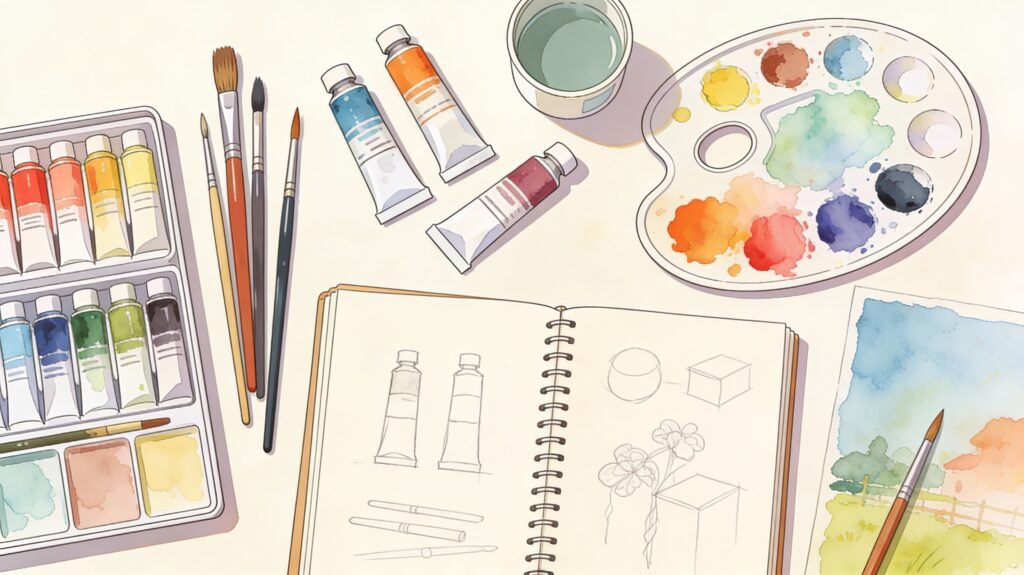
This might sound obvious, but it’s the tip most artists skip: there is no substitute for painting regularly. Improvement comes from repetition, experimentation, and pushing through the resistance that happens on difficult days.
Why it matters: Painting isn’t learned; it’s internalized through repeated action. Muscle memory, color intuition, and problem-solving ability all develop through accumulated painting hours.
How to build a sustainable practice:
- Timed painting sessions: Commit to 20-30 minute focused painting sessions even on days you don’t feel inspired. The goal is process, not a finished masterpiece
- Challenge-based practice: Set weekly challenges (paint with one hand, use only one color, paint without pencil lines) to keep practice interesting
- Low-stakes experiments: Use scrap paper, cheap canvas, or small formats for experiments. Remove the pressure of creating “good” work and focus on learning
- Progress documentation: Keep a practice journal with dates. Look back monthly to see how far you’ve come—this is incredibly motivating
- Remove perfectionism: Some of your best learning happens in “failed” paintings. A painting that didn’t work teaches you more than one that came easily
Realistic commitment:
- Beginners: 3-4 sessions weekly, 30-60 minutes each
- Intermediate: 4-5 sessions weekly, 60-90 minutes each
- Advanced: Consistent daily practice with longer sessions
The payoff: Within 3-6 months of consistent practice, you’ll see transformation. Within a year, you’ll be amazed at how far you’ve progressed.
The Path Forward
Improving your painting skills isn’t mysterious or dependent on innate talent. It’s a systematic process of understanding fundamentals, identifying gaps, practicing deliberately, and maintaining consistency. Start with one tip—perhaps mastering a limited palette or creating value studies. As that becomes comfortable, layer in another skill.
Remember, every painter you admire started exactly where you are. The difference between them and others is that they committed to the journey. The canvas is waiting. Pick up your brush, and let’s paint better.
What’s your biggest painting challenge right now? Share in the comments—I’d love to help you develop a targeted practice plan.