
Learning digital art from a young age gives children a powerful mix of creativity and tech skills, but it works best when balanced with at least some traditional hand-drawing practice.
Why Learn Digital Art from a Young Age?
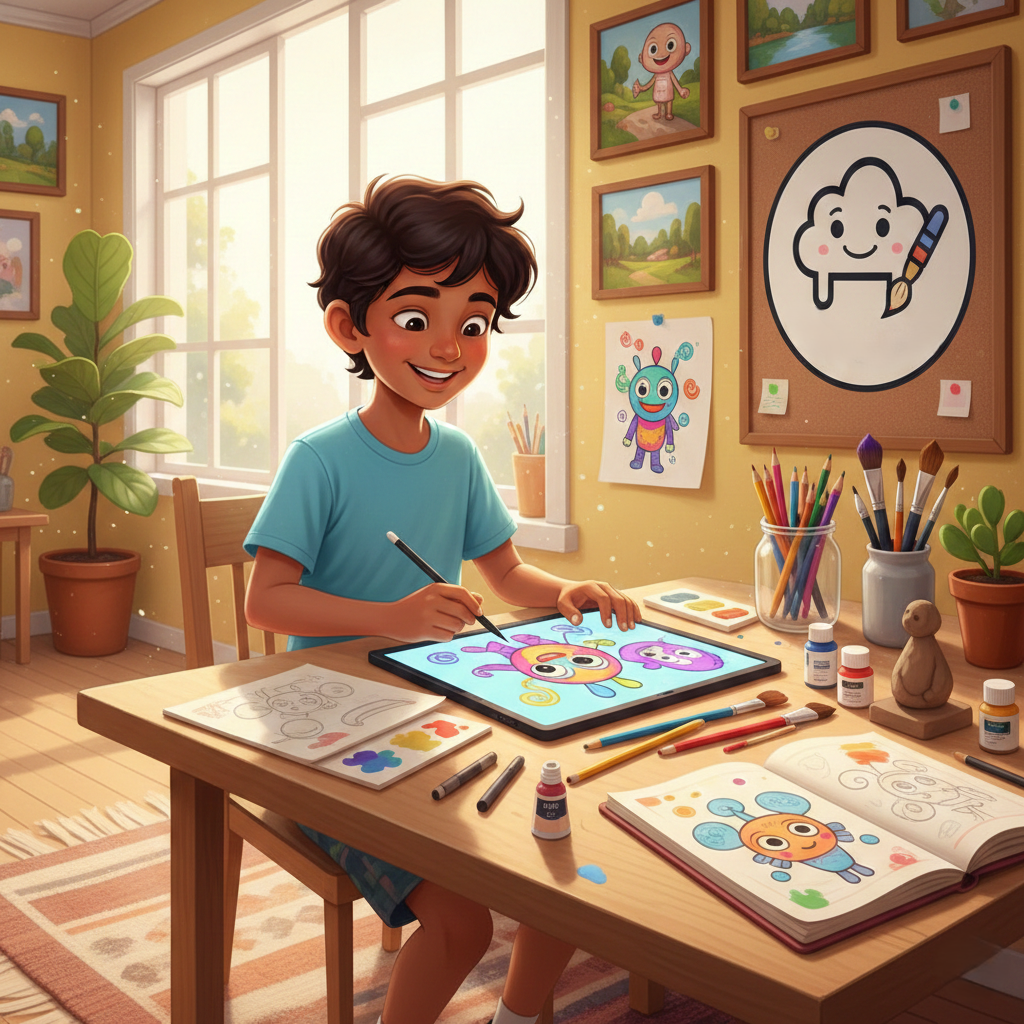
And Do You Need Traditional Art First?
Walk into any home today and you’ll see it: kids swiping, tapping, and watching digital content for hours. What if some of that screen time turned into creating instead of just consuming? That’s where digital art comes in.
Digital art is no longer a niche skill for a few professionals; it’s part of animation, gaming, advertising, UX, social media content, and even STEM fields that rely on strong visual communication. Starting early helps children grow up not just as users of technology, but as confident visual creators in a digital world.
So the big questions are:
- Why should one learn digital art from a young age?
- Should one learn art “by hand” before learning digital art?
Let’s unpack both.
Why Digital Art Is Worth Starting Young
1. Kids already live in a digital world
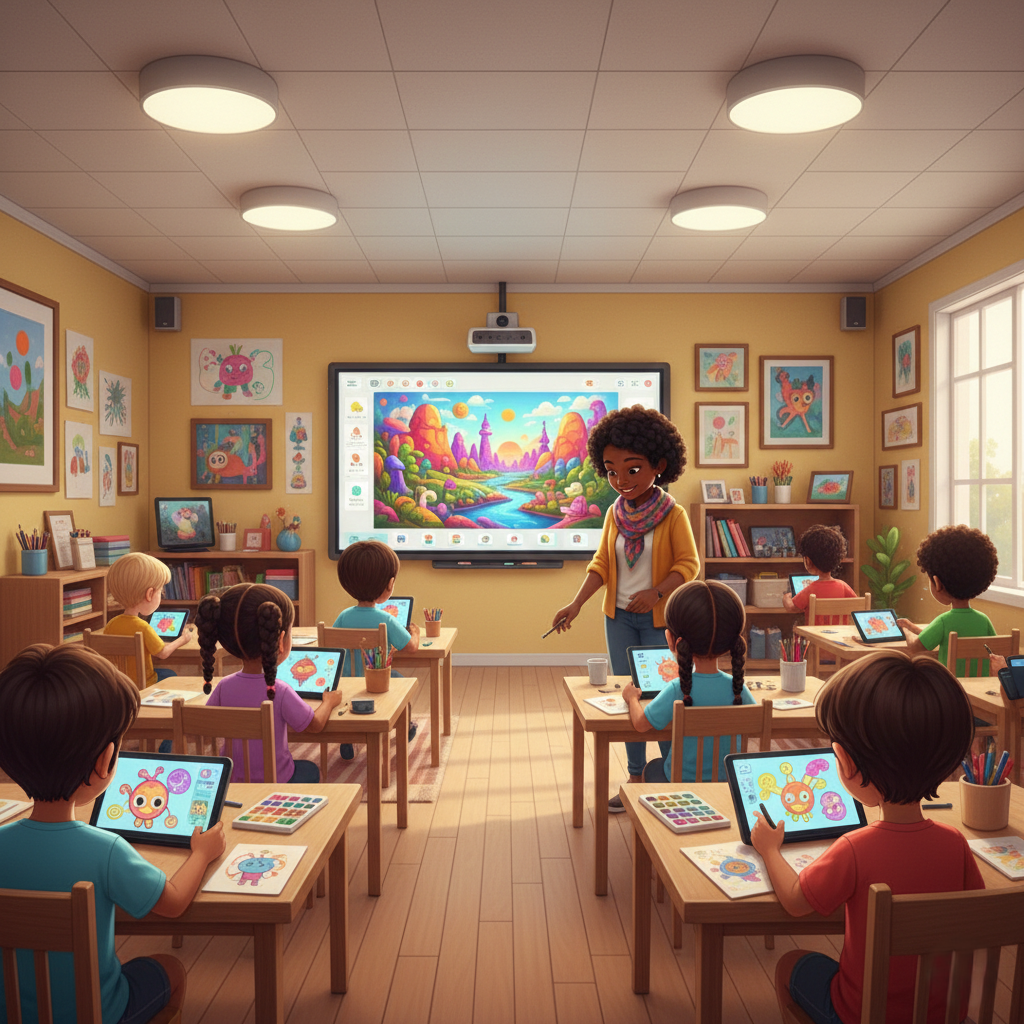
Children today grow up surrounded by tablets, phones, and laptops, so digital tools feel natural to them. Digital art turns that familiarity into a constructive skill, teaching them to make images, characters, and stories instead of just scrolling past them.
Many schools and programs are now integrating digital art into their curriculum because it aligns so well with 21st-century skills and digital literacy.theinspiredclassroom+2
2. Huge range of tools in one device
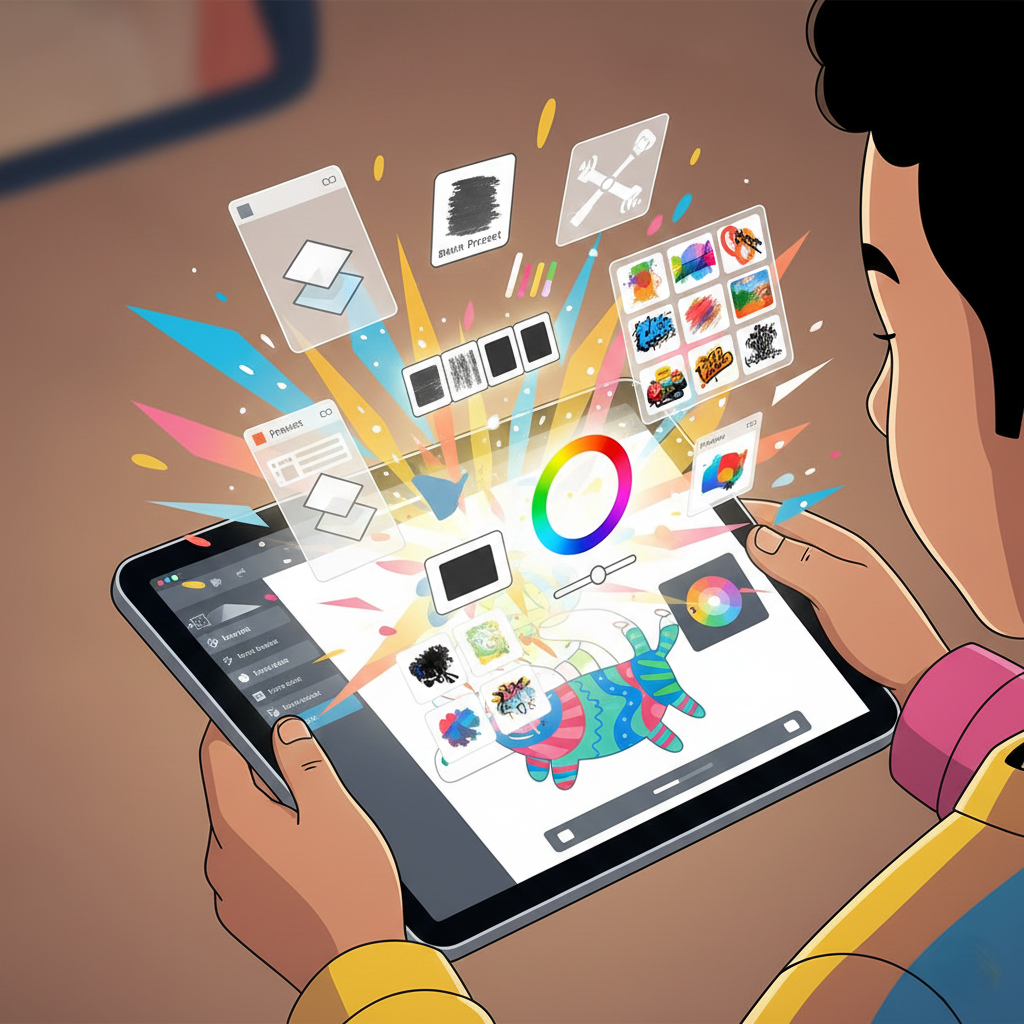
On a tablet or computer, a child can access pencils, markers, watercolours, airbrushes, textures, layers, and effects—all in a single app. This variety encourages experimentation: they can try bold colour schemes, wild brushes, and different styles without needing an entire art store at home.
Because the medium is flexible and forgiving, students can quickly iterate, compare versions, and discover their own visual voice.
3. Safe space to make mistakes (and learn from them)
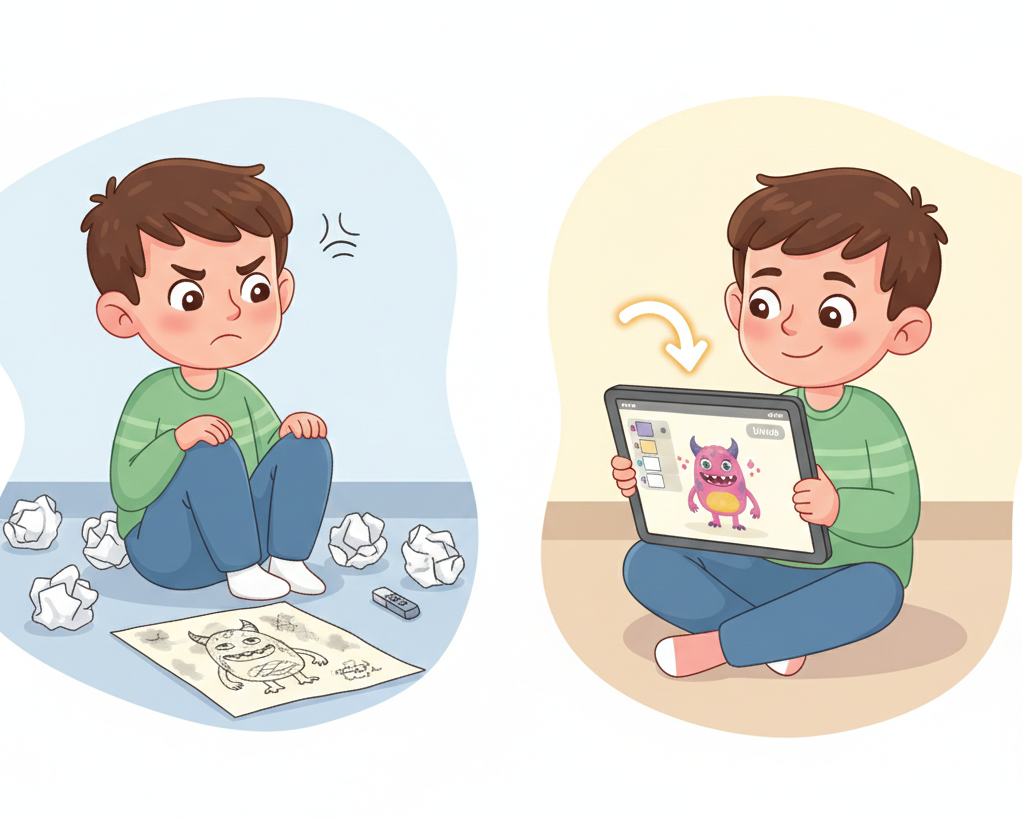
Digital art offers undo, layers, and non-destructive editing. Children can try a complex background, realise it doesn’t work, and remove it with a tap—without “ruining” the whole drawing. This lowers the fear of failure and encourages risk-taking, which is crucial for creativity.
Traditional media often involves more pressure because mistakes can be harder to fix, especially at the end of a long piece. Digital tools make the learning process more playful and less intimidating.
4. Creativity and thinking skills get a boost
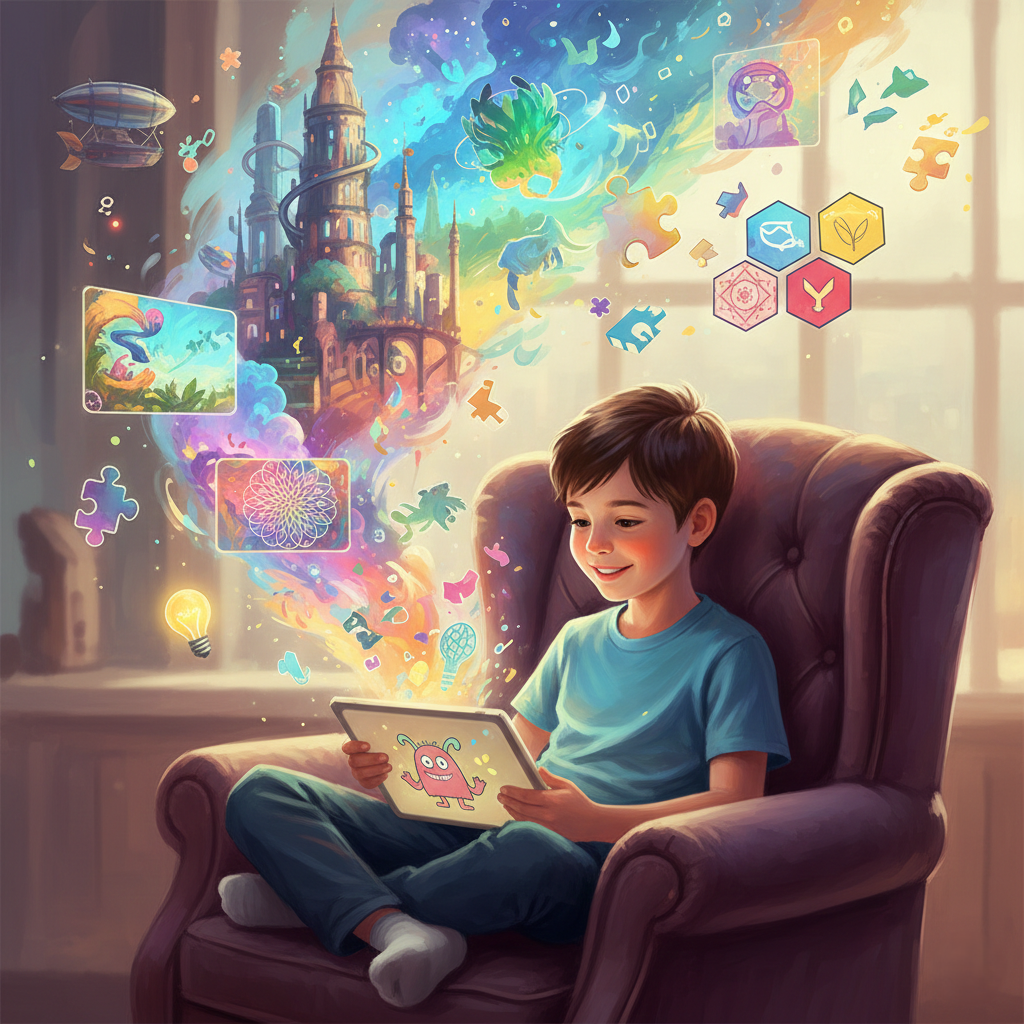
Decades of research show that visual art instruction in general enhances creativity, critical thinking, and problem-solving in children. Studies using creativity tests like the Torrance Tests of Creative Thinking have found that students who participate in visual arts programs show statistically significant gains compared with peers who don’t.scholarworks.
Recent work on visual arts and design education also shows that consistent training in drawing, sketching, and visual imagination strengthens both domain-specific and general creative thinking abilities. Whether the medium is digital or traditional, structured art learning changes how children.
5. Builds both fine motor skills and tech skills
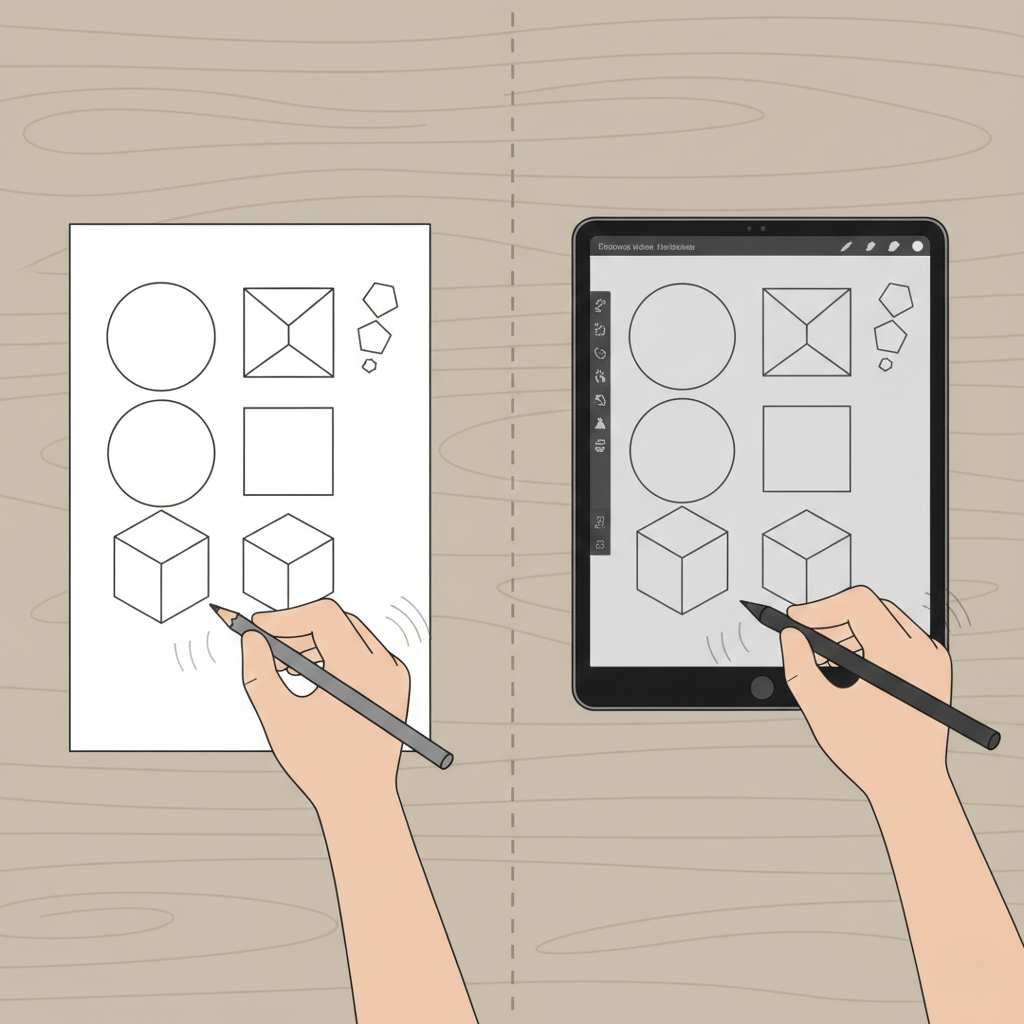
Drawing on a tablet with a stylus demands hand–eye coordination, control, and precision, much like pencil drawing. At the same time, students learn to navigate software, use layers, manage brushes, and understand file formats—practical digital skills that transfer to many modern careers.
Some education experts highlight that digital art improves children’s ability to interpret visual information and supports fine motor development, which are valuable in STEM and STEAM contexts too.
6. Easy sharing, feedback, and community
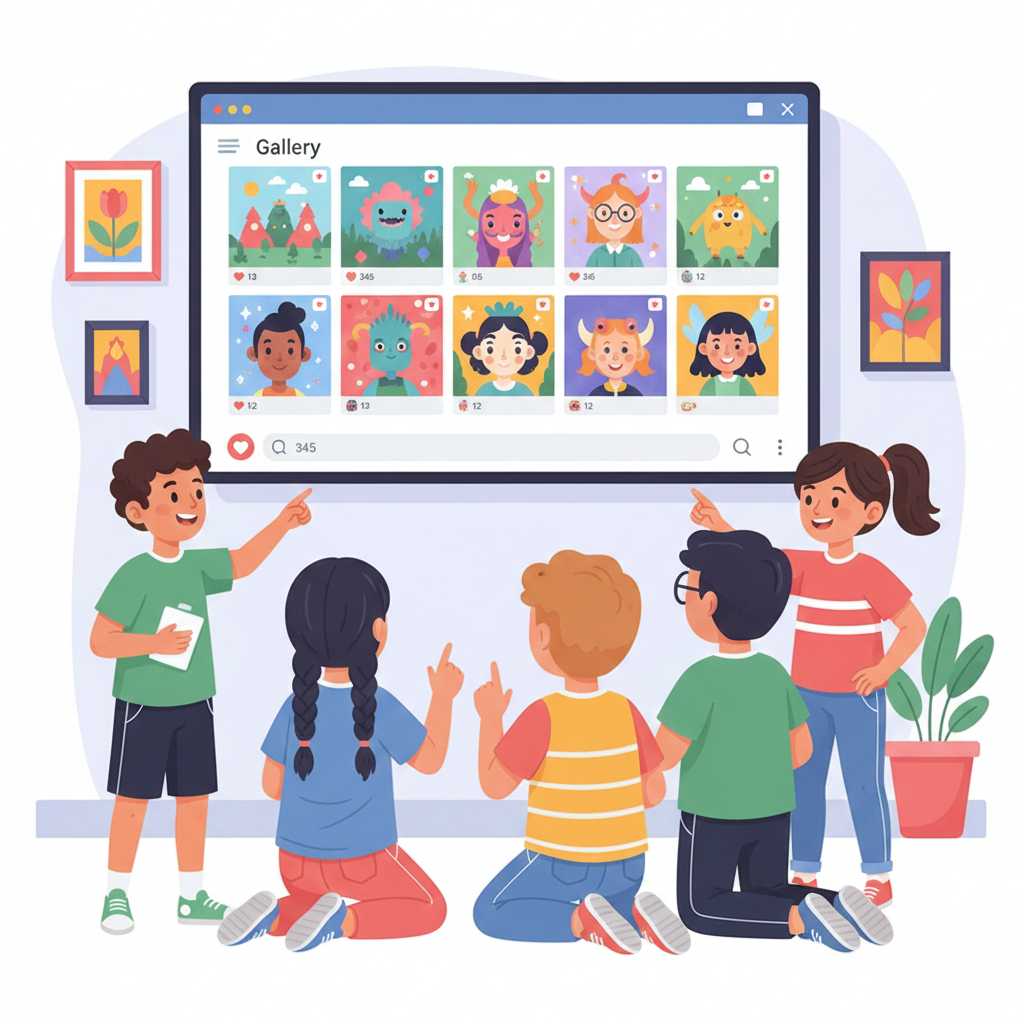
Online platforms and digital classrooms let young artists share their work with peers, get feedback, and collaborate on projects. This social aspect keeps them motivated and exposes them to diverse styles and ideas early on.
Many youth-oriented digital art programs intentionally build in peer review and community spaces, helping children develop communication skills alongside their visual skills.
Does One Need Traditional Art Before Digital?
This is the classic debate:
“Should I (or my child) learn sketching with paper and pencil before touching a drawing tablet?”
Short answer:
- No, traditional art is not a strict prerequisite for digital art.
- Yes, traditional fundamentals are extremely helpful and worth learning—before, during, or alongside digital.
Digital art and traditional art rely on the same core skills: understanding form, anatomy, perspective, light and shadow, colour, composition, and gesture. Many experienced digital artists and educators emphasize that while you can technically start directly on a tablet, your digital work improves dramatically when those fundamentals are in place.
So instead of “traditional or digital first,” it’s more accurate to think in terms of fundamentals + tools:
- Fundamentals: drawing, seeing shapes, proportion, value, colour relationships.
- Tools: pencil, charcoal, paint, stylus, graphics tablet, iPad, etc.
The fundamentals carry over to any tool you pick up.
Why Hand Drawing Still Matters in the Digital Age
Even if a child is very excited about Procreate or Photoshop, there are solid reasons to include at least some traditional art in their journey.
1. Stronger observation and “seeing” skills
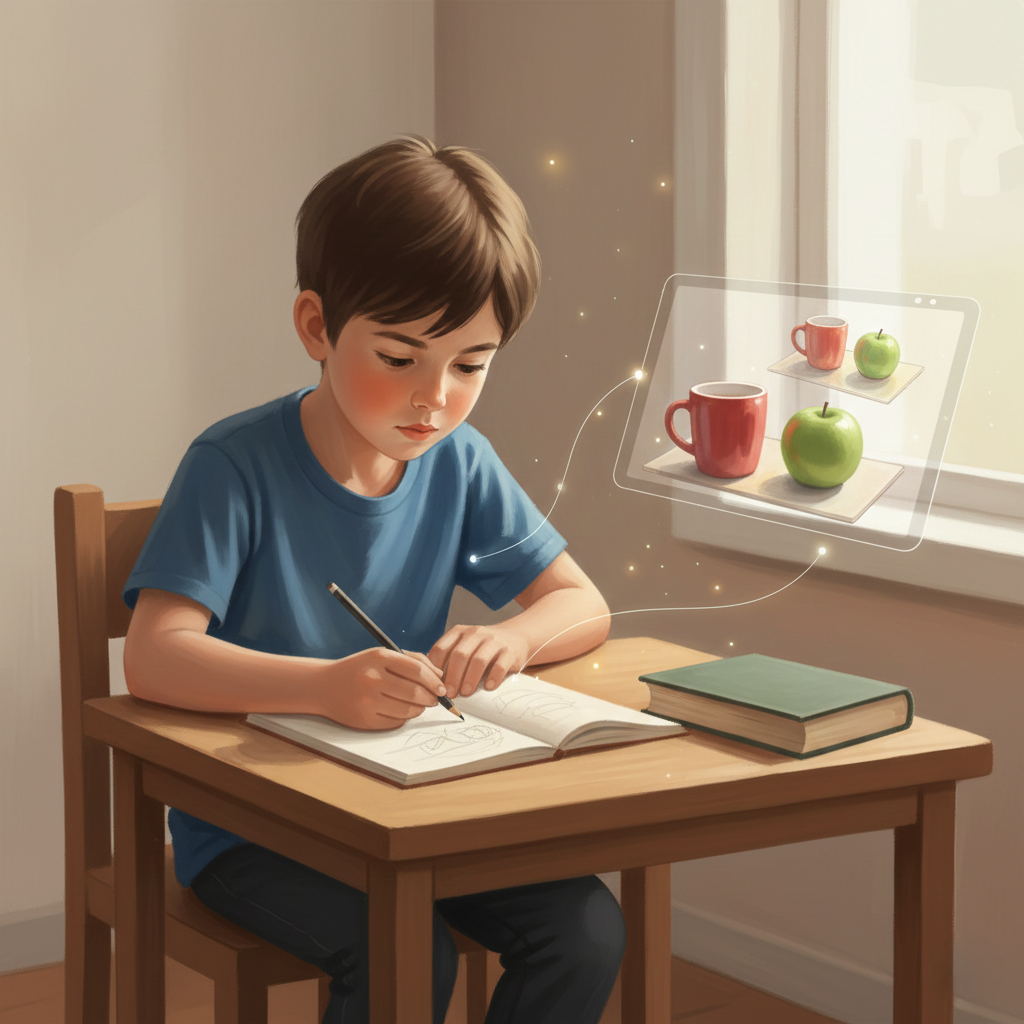
Working with pencil and paper forces students to look carefully at real objects, notice subtle angles, and judge proportions without software aids. This kind of direct observation training builds a mental library of forms and structures that later makes digital drawing (especially anatomy, perspective, and realistic lighting) much easier.
2. Better line control and confidence
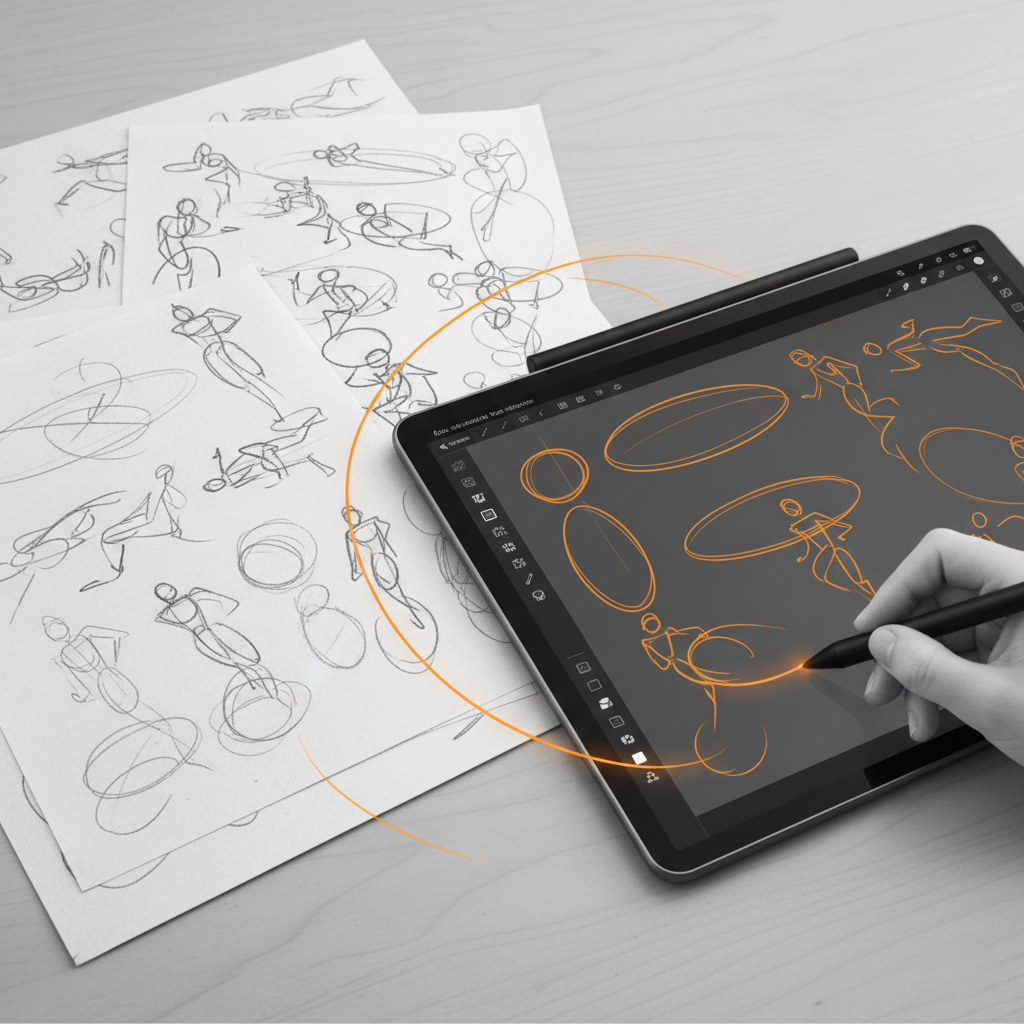
Traditional drawing doesn’t have an undo button, so students must commit to their strokes and learn to draw with intention. That deliberate practice develops cleaner lines, stronger gesture, and more confident mark-making, which translate very well when they switch to a stylus.
Some artists even report that digital feels harder at first precisely because they haven’t yet built that control and confidence in their lines.
3. Deeper focus, fewer distractions
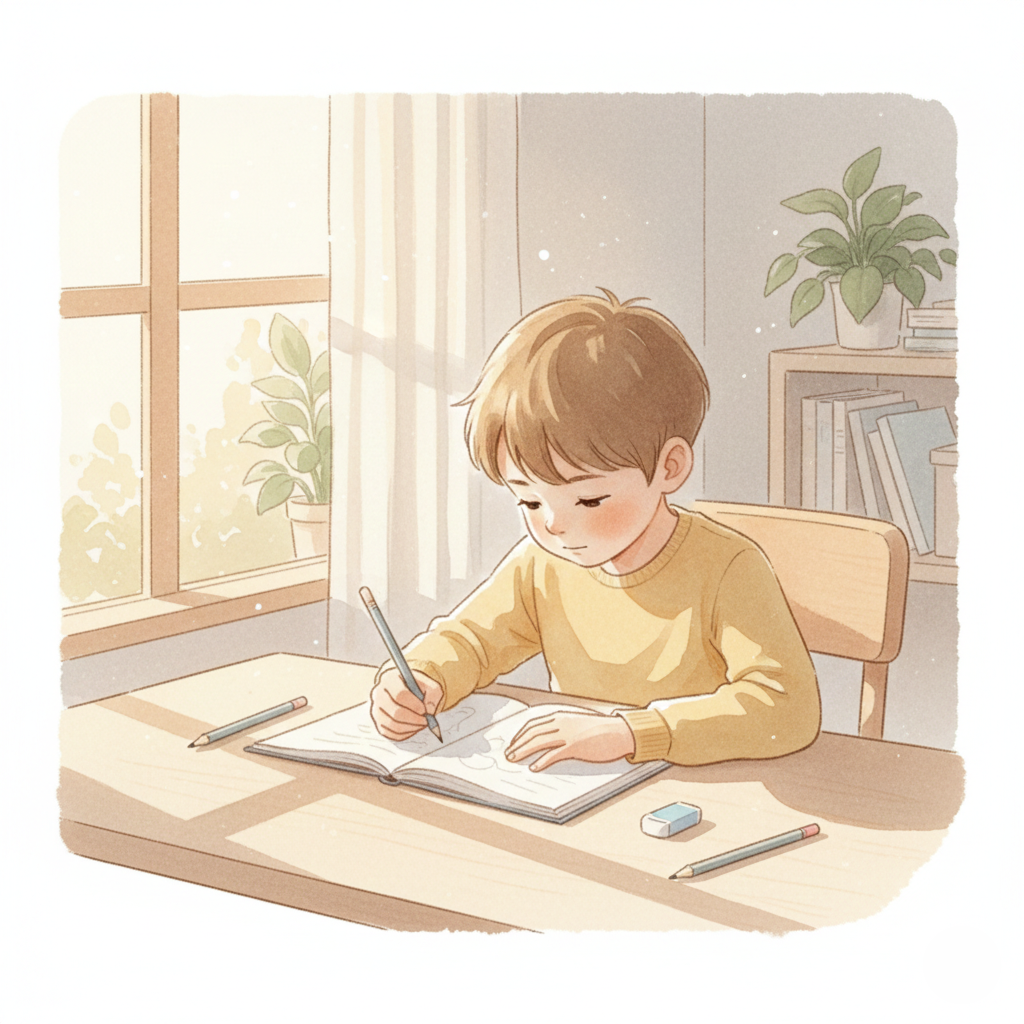
Paper and pencil provide a minimalist environment: no notifications, no infinite brush menus, no colour pickers to get lost in. This simplicity can help children focus on one core skill at a time—like proportion, value, or gesture—without being overwhelmed by options.journals.
That kind of focused, mindful practice supports the cognitive benefits researchers see in students who engage consistently with visual arts.
A Practical Learning Path: Blending Traditional and Digital
Instead of forcing a strict order, you can design a blended path that uses the strengths of both.
Stage 1: Foundations by hand (even if minimal)
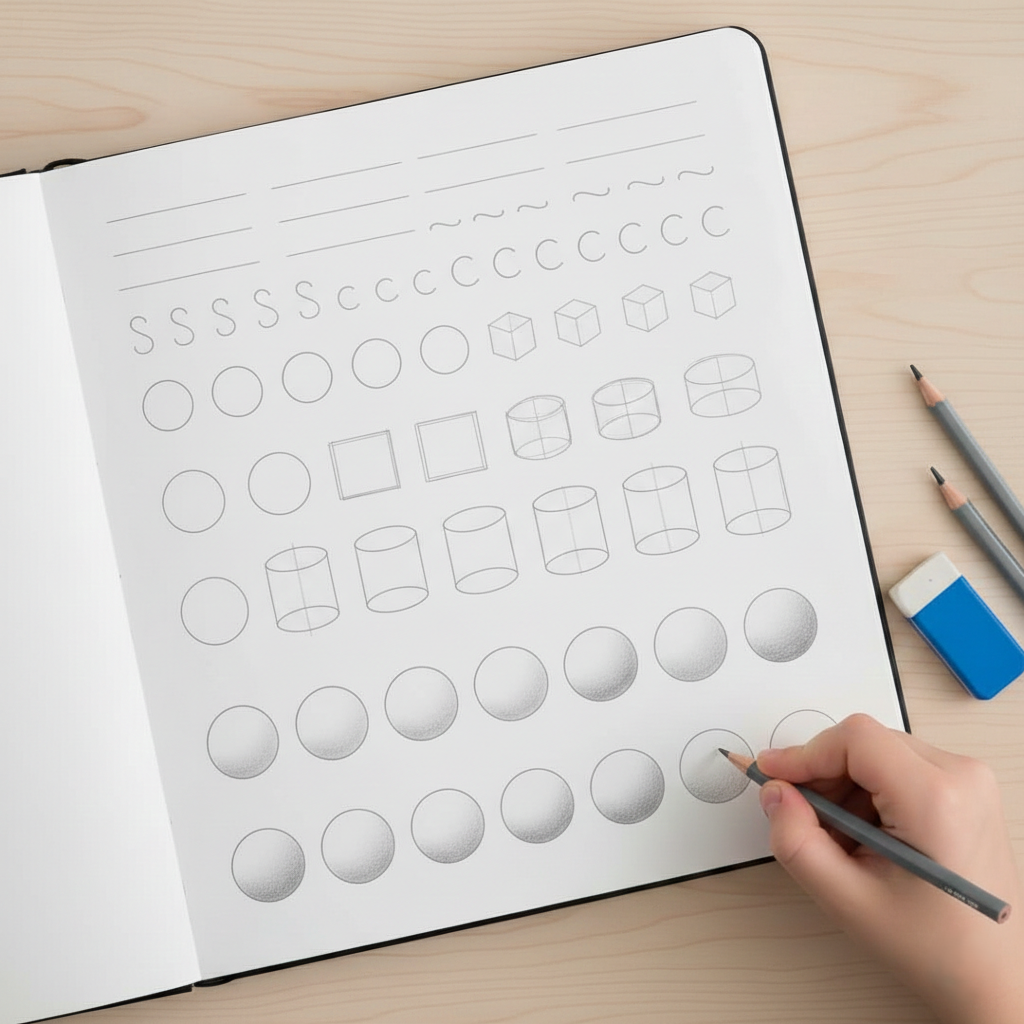
- Simple exercises: lines, circles, basic shapes, shading.
- Sketching real objects at home: cups, shoes, plants, faces.
- Focus on observation, proportion, light and shadow.
Even a few months of low-pressure, traditional sketching can give a child a noticeable head start when they move into digital tools.
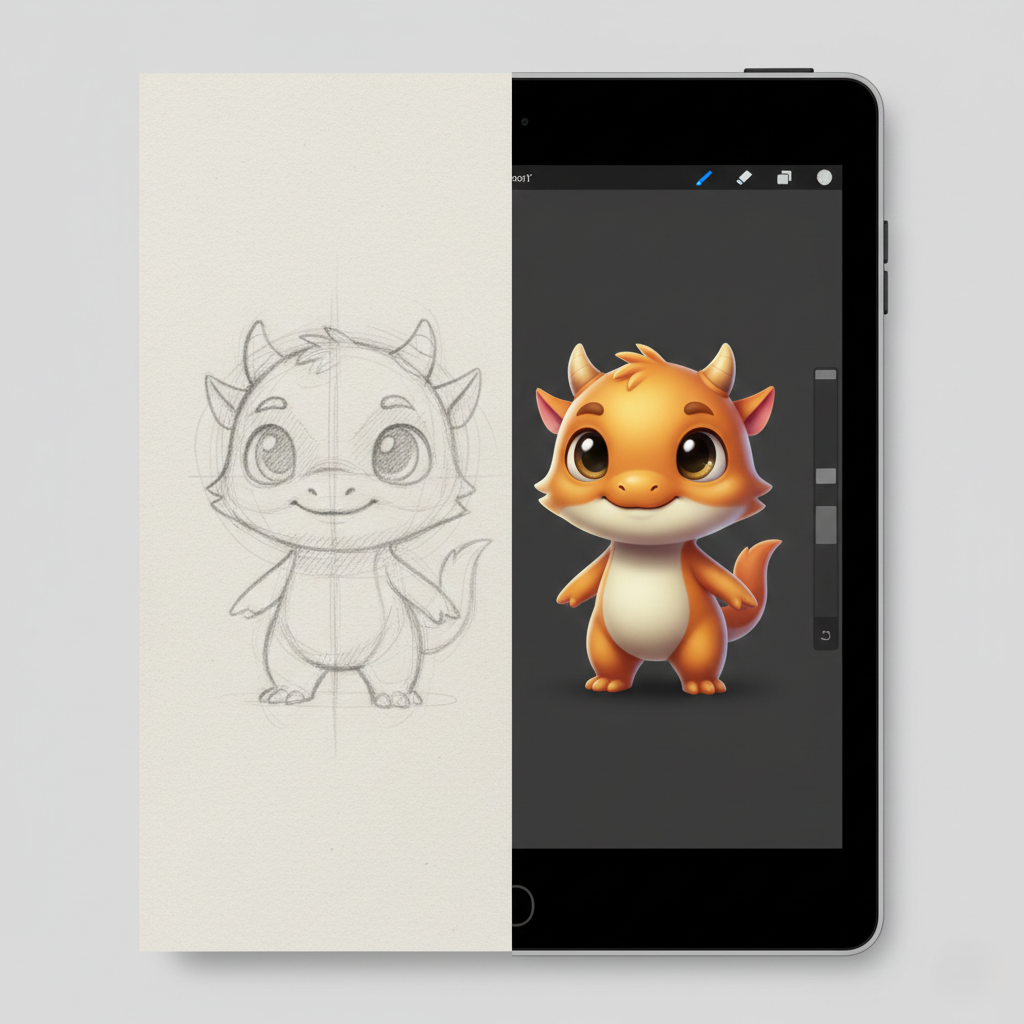
Stage 2: Introduce digital as a “second sketchbook”
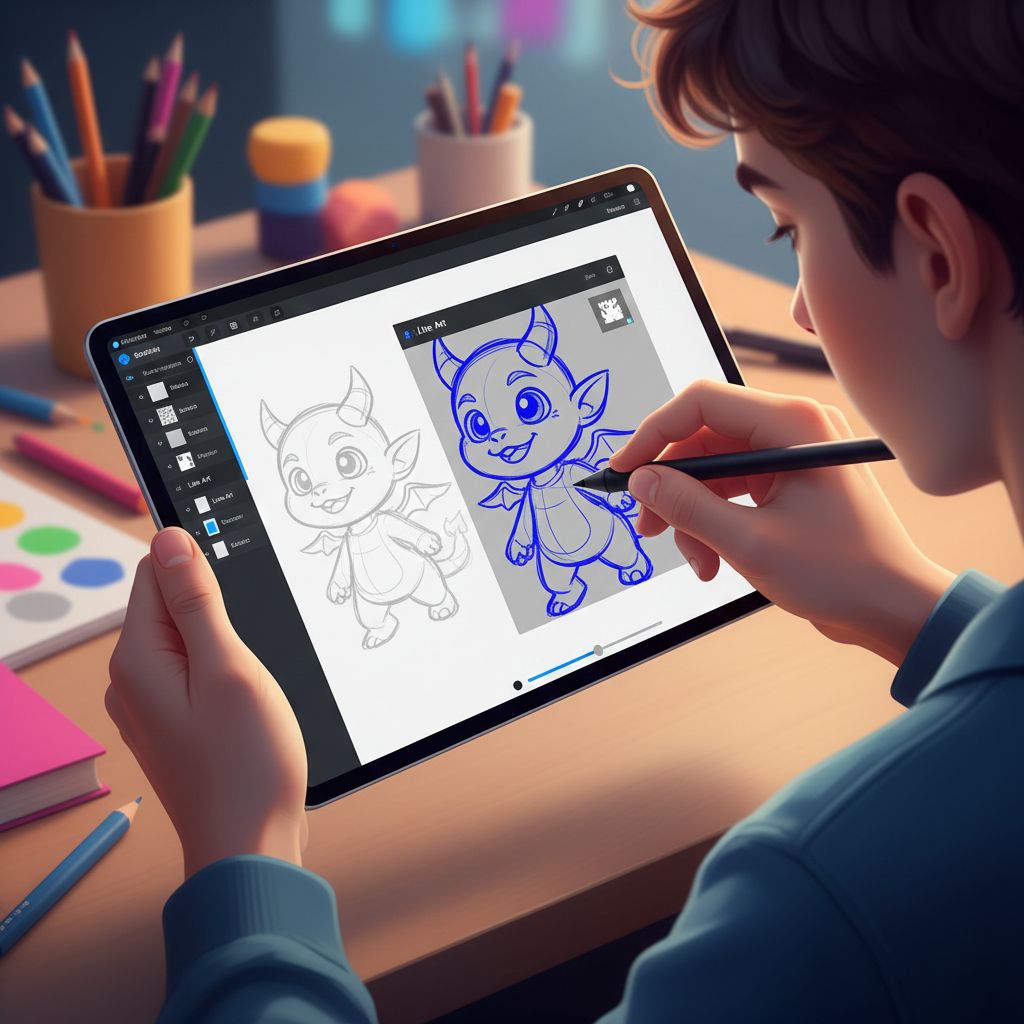
- Let them redraw their paper sketches on a tablet.
- Use layers to explore alternate poses, hairstyles, or costumes.
- Experiment with colour and brushes that would be hard or expensive traditionally.
Here, digital becomes a playground where they apply their growing fundamentals and see instant variations.
Stage 3: Parallel growth in both mediums
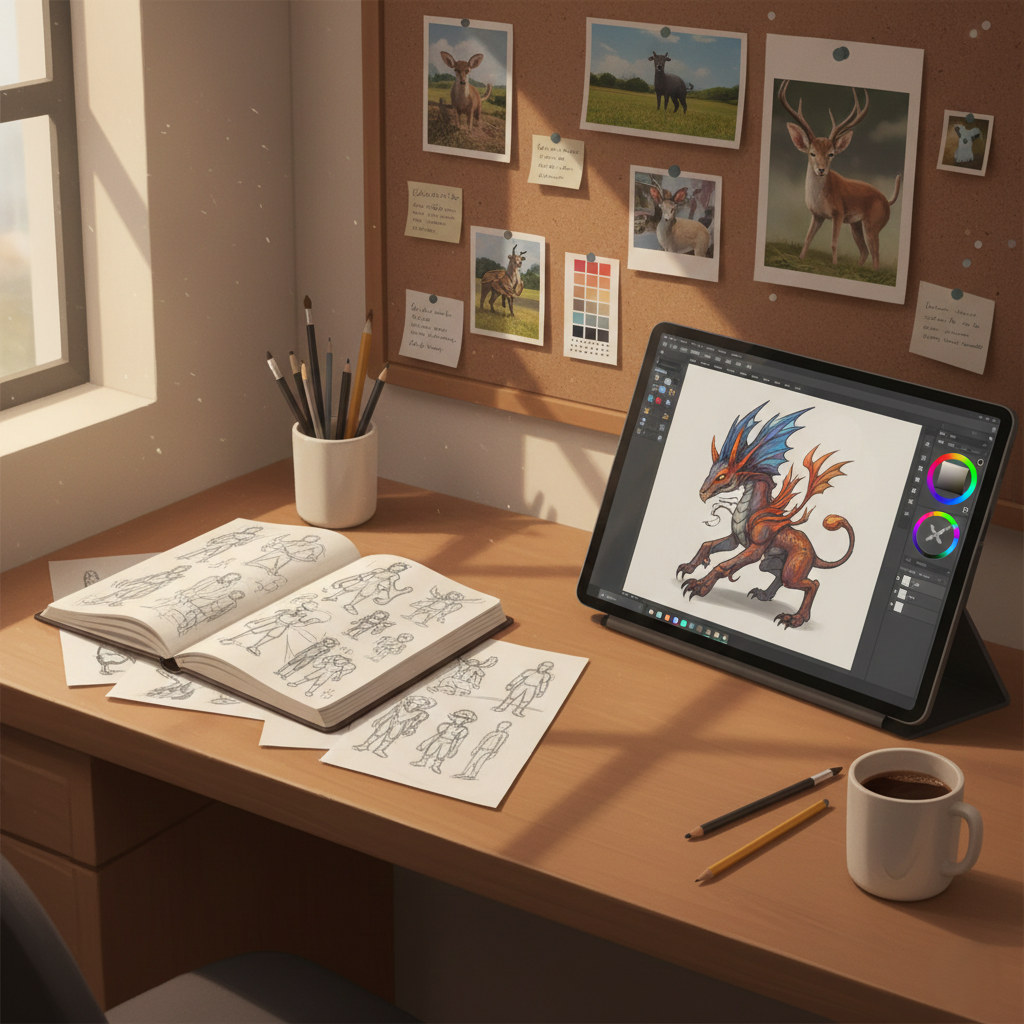
- Continue hand studies for anatomy, perspective, and value.
- Build more polished digital pieces: characters, comics, environments, fan art.
- Encourage them to switch freely: thumbnail ideas in a notebook, refine digitally, or vice versa.
This “tradigital” approach—mixing traditional and digital—reflects what many professional illustrators, concept artists, and animators do in their daily workflows.
So, What Should Parents and Young Artists Do?

If you’re a parent wondering where to start, or a young artist eager to jump into anime and character art:
- Yes, start digital art young. It harnesses children’s natural comfort with technology, builds creativity, and develops both artistic and digital skills they’ll need in the future.
- Don’t skip the basics. Add at least some traditional drawing practice—whether before or alongside digital—to strengthen observation, line control, and fundamental understanding.scholarworks.
- Think “both–and,” not “either–or.” Traditional art shapes the eye and the hand; digital art opens doors to modern tools, workflows, and creative possibilities. Together, they create a complete, future-ready artist.
I