

Sketching Fundamentals – Light and Shadow
In sketching, light defines surfaces and reveals form, while shadow describes the absence or redirection of light. Together, they transform a flat drawing into a convincing illusion of volume and space.
Skip to content

In sketching, light defines surfaces and reveals form, while shadow describes the absence or redirection of light. Together, they transform a flat drawing into a convincing illusion of volume and space.
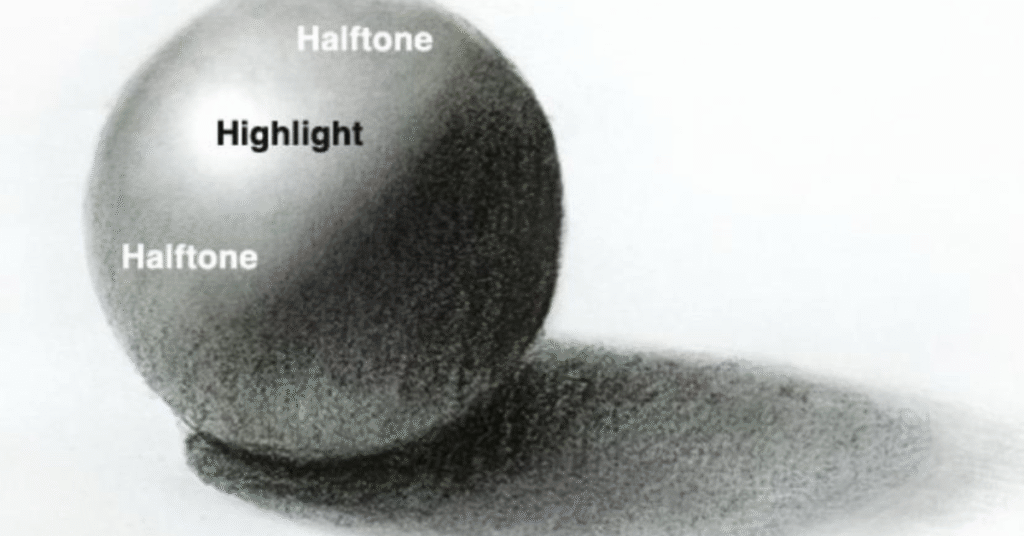
In sketching, light defines surfaces and reveals form, while shadow describes the absence or redirection of light. Together, they transform a flat drawing into a convincing illusion of volume and space.

Learning to sketch simple objects is one of the most fundamental skills every artist should develop. Two excellent subjects for beginners are the humble jug and the elegant wine glass. These objects offer perfect opportunities to practice essential drawing techniques while building confidence in observational skills.
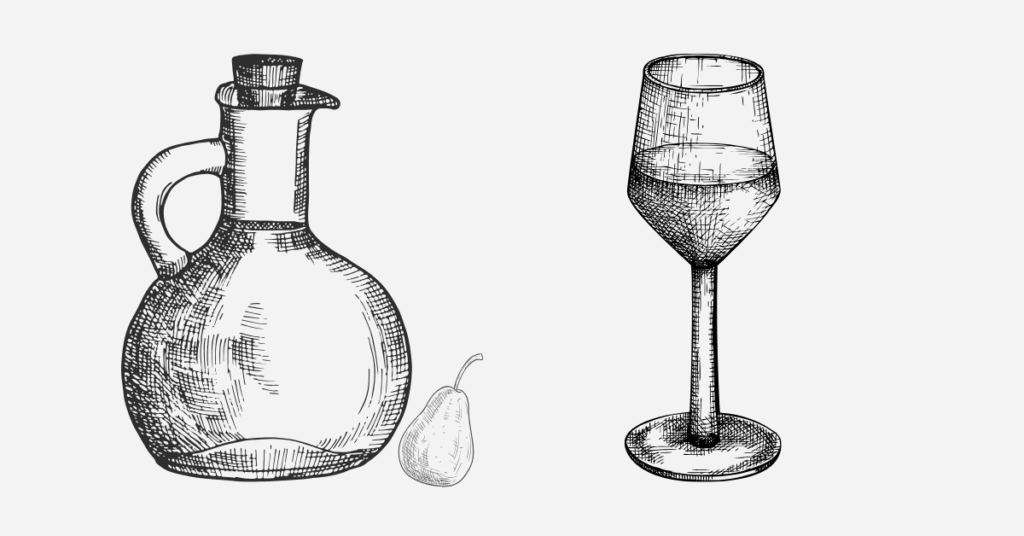
Learning to sketch simple objects is one of the most fundamental skills every artist should develop. Two excellent subjects for beginners are the humble jug and the elegant wine glass. These objects offer perfect opportunities to practice essential drawing techniques while building confidence in observational skills.
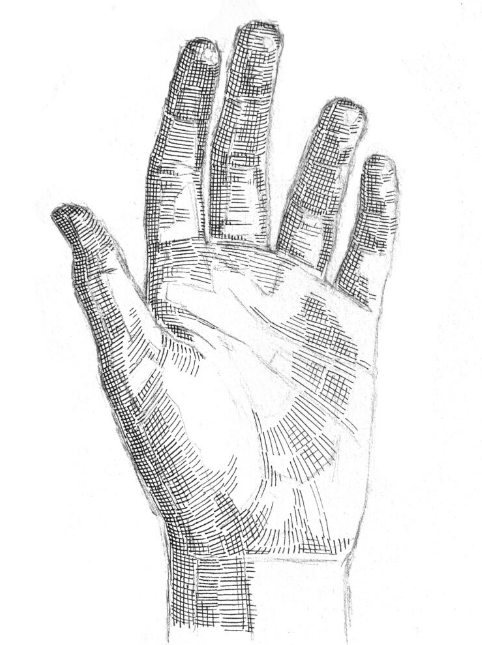
Hatching techniques are essential tools for artists, allowing them to create value, texture, and the illusion of depth with nothing more than lines. By varying the direction, density, and overlap of lines, artists can add dimension and drama to their work—especially in mediums where blending is not possible, like pen and ink.

Learning to draw simple shapes isn’t just about drawing geometric forms—it’s about developing the fundamental skills that underpin all drawing. These shapes serve as construction tools that help artists break down complex subjects into manageable parts. When you can confidently draw a circle, triangle, square, and cylinder, you can construct everything from a human face to architectural structures.
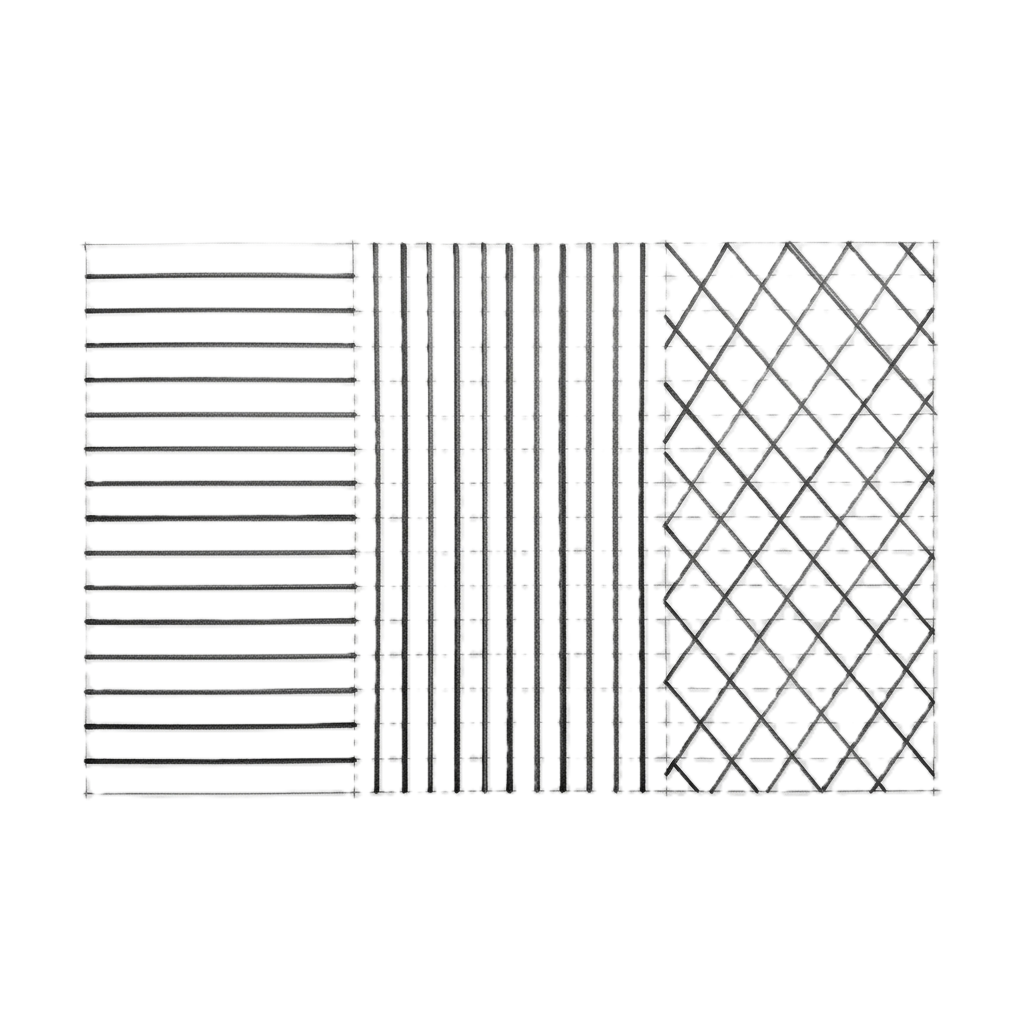
Mastering lines is the foundation of great drawing! In this video, we’ll walk you through essential line exercises — straight lines, curves, zigzags, waves, and spirals — designed to build your hand control, confidence, and flow.
This is the first and most important habit for every aspiring artist. Do it daily for just 5–10 minutes and see the improvement in your sketches!
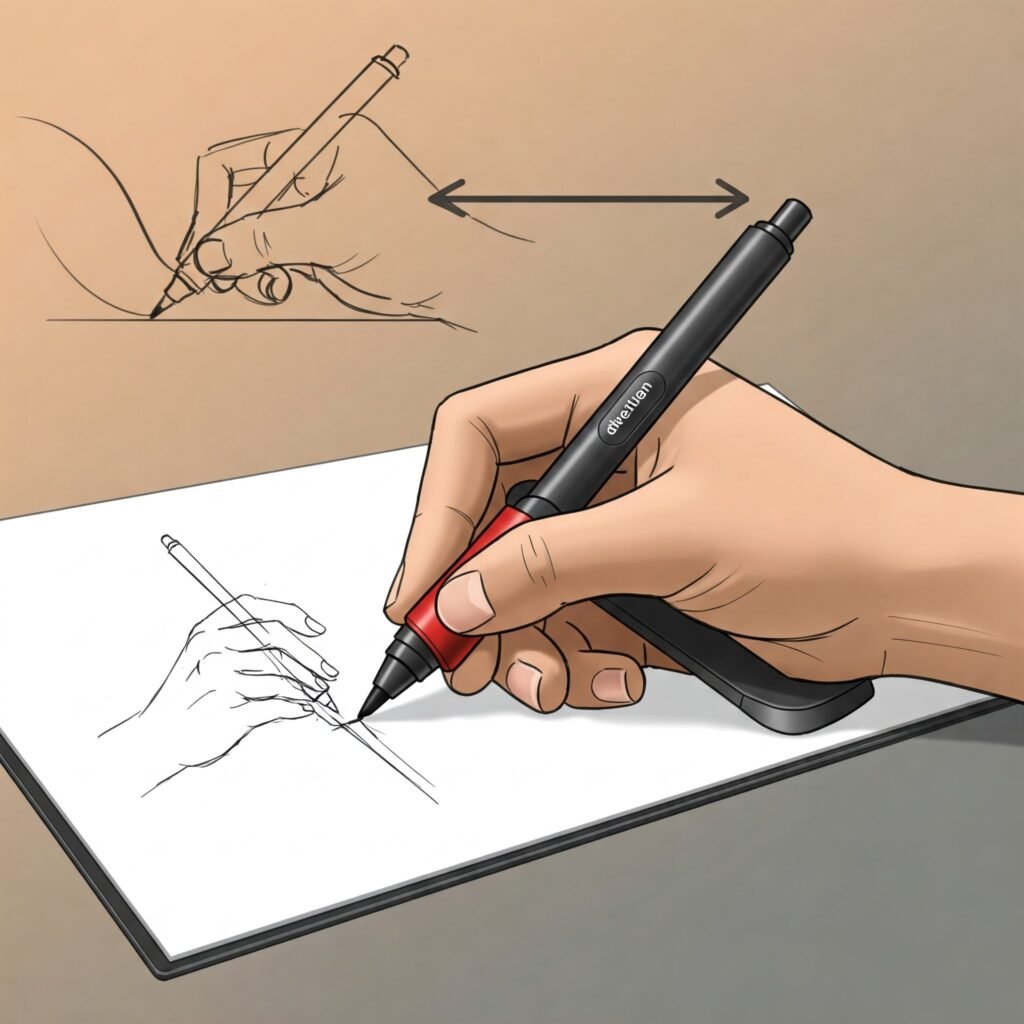
Spend just five minutes a day on focused, fun sketching drills to build your confidence, loosen up your hand, and supercharge your drawing skills—no pressure, all progress.

The key for beginners is to start simple, practice regularly, and embrace the learning process. With basic materials and consistent practice, sketching can open the door to a lifelong journey of artistic expression and creative growth. Whether sketching remains a preferred medium or serves as a stepping stone to more detailed work, it provides invaluable benefits for developing artists at any stage of their journey.
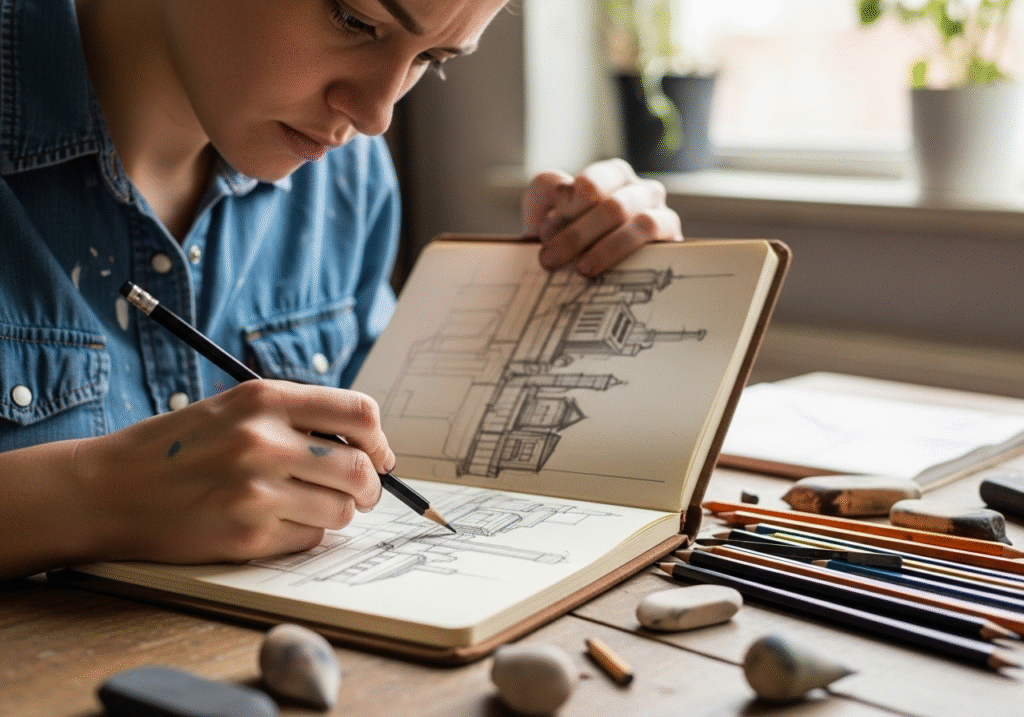
Sketching every day—just 10–15 minutes—trains your hand, sharpens your eye, and turns drawing into a habit rather than an occasional pastime. Consistency accelerates improvement more than sporadic long sessions

In this quick and easy visual guide, explore 8 essential acrylic painting techniques that every artist should know. Whether you’re a beginner or looking to refine your skills, these techniques will elevate your creative expression on canvas.
🖼️ Watch, learn, and practice on your own 8-grid canvas to master each technique!

Becoming an artist and art teacher without an art degree isn’t just possible—it’s surprisingly common in the creative world. Your dedication, self-motivation, and unique perspective are your greatest assets. In art, passion speaks louder than credentials.