

Art classes offer children far more than just the ability to draw or paint. Whether attending sessions in person or learning through a screen, young learners develop a rich tapestry of skills that extend well beyond the canvas. Understanding what children gain from structured art education helps parents and educators appreciate its value in holistic child development.
Fundamental Artistic Skills
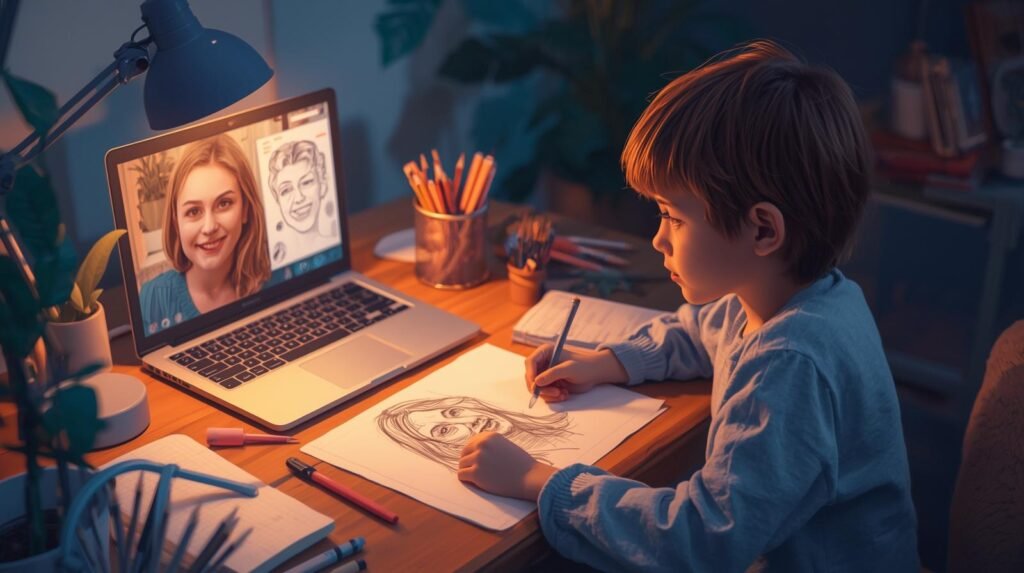
Children begin their journey by mastering the basics of visual expression. They learn to control pencils, brushes, and other tools with increasing precision, developing fine motor skills that benefit their overall coordination. Drawing exercises teach them about lines, shapes, and proportions, while painting introduces them to color mixing, brush techniques, and texture creation.
Both online and offline classes cover essential concepts like perspective, composition, and shading. The difference lies in delivery—offline classes allow immediate hands-on correction, while online sessions often use screen sharing and digital demonstrations. Many online platforms now incorporate interactive tools that let instructors annotate directly on student work in real-time, bridging the gap between physical and virtual instruction.
Creative Problem-Solving and Critical Thinking
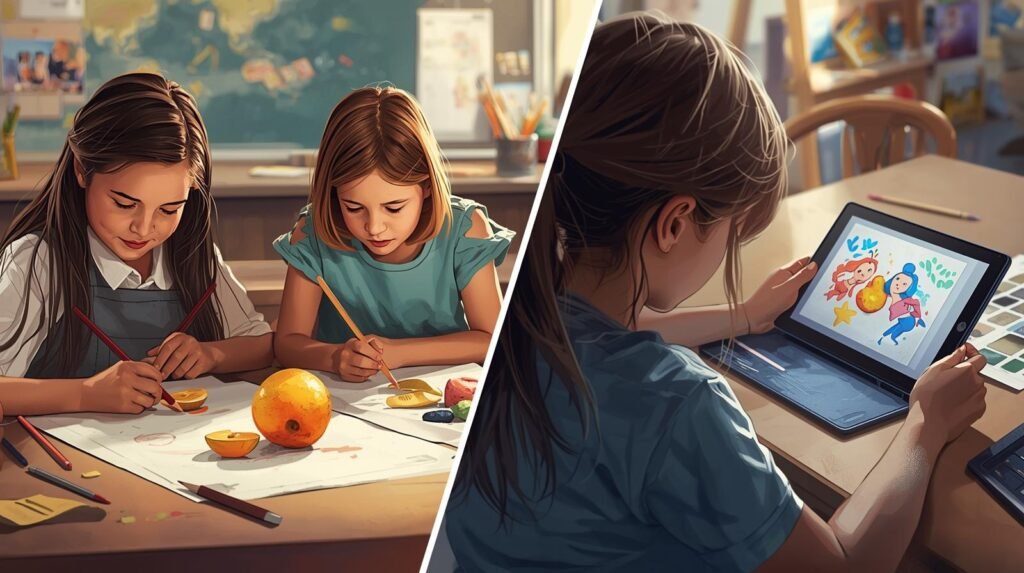
Art classes challenge children to think creatively when faced with artistic problems. How do you capture the roundness of an apple? What colors create the feeling of a sunset? These questions require experimentation, observation, and innovative thinking.
Children learn that mistakes are opportunities rather than failures. When a painting doesn’t turn out as planned, they discover alternative approaches and develop resilience. This problem-solving mindset transfers to academic subjects and everyday situations, teaching them to approach challenges with flexibility and curiosity.
Observation and Attention to Detail
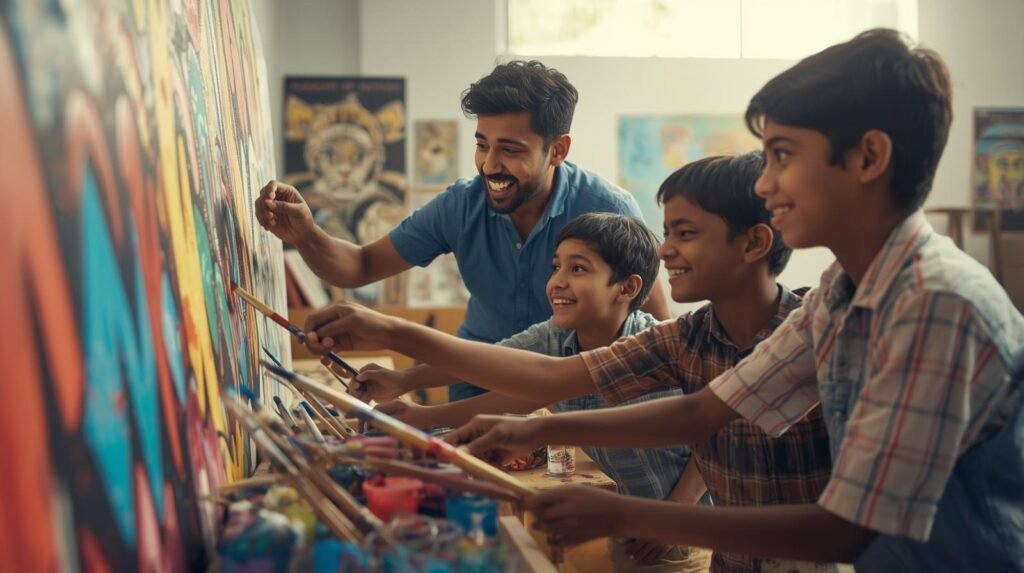
Creating art demands careful observation of the world. Children learn to notice subtle variations in color, the way light falls on objects, and the proportions that make a face recognizable. This heightened awareness sharpens their perceptual skills and teaches them to look beyond surface appearances.
Whether studying a still life in person or working from reference images online, children develop patience and concentration. The act of translating three-dimensional reality onto a two-dimensional surface requires sustained attention—a valuable skill in our distraction-filled world.
Self-Expression and Emotional Intelligence
Art provides children with a voice beyond words. Through colors, shapes, and imagery, they communicate feelings, ideas, and experiences that might be difficult to articulate verbally. This emotional outlet is crucial for mental well-being and helps children process complex emotions.
Both online and offline formats support this expression, though the dynamics differ. Physical classes offer immediate peer feedback and shared creative energy, while online classes may provide a more comfortable environment for shy children to express themselves without the pressure of immediate in-person scrutiny.
Cultural Awareness and Art Appreciation
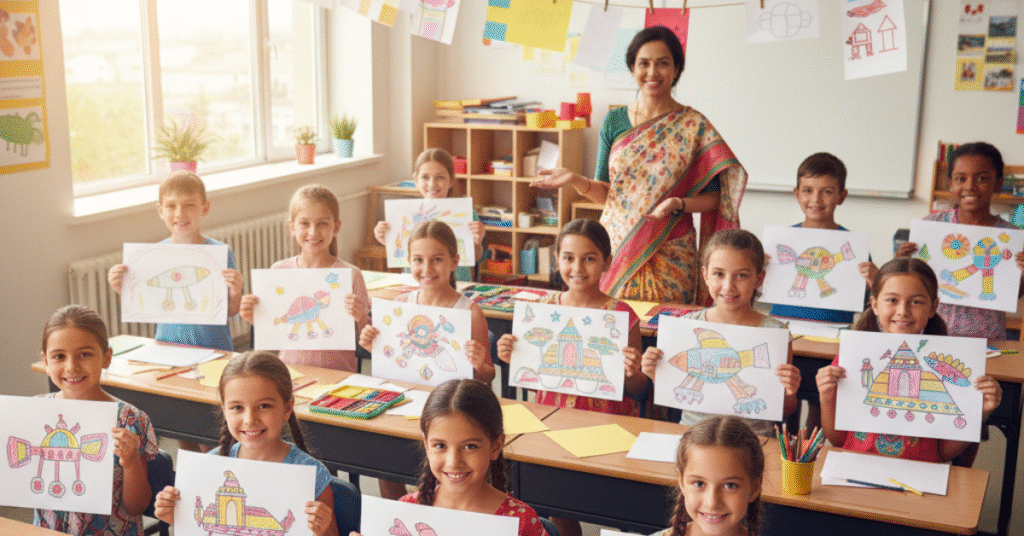
Quality art programs expose children to diverse artistic traditions, historical movements, and cultural perspectives. They learn about Renaissance masters, Japanese manga, Indian miniature painting, and contemporary digital art. This exposure broadens their worldview and fosters appreciation for different cultures and time periods.
Online classes have a unique advantage here—they can easily showcase global artworks through digital galleries and virtual museum tours, bringing masterpieces from around the world directly to students’ screens.
Technical Skills Specific to Each Format
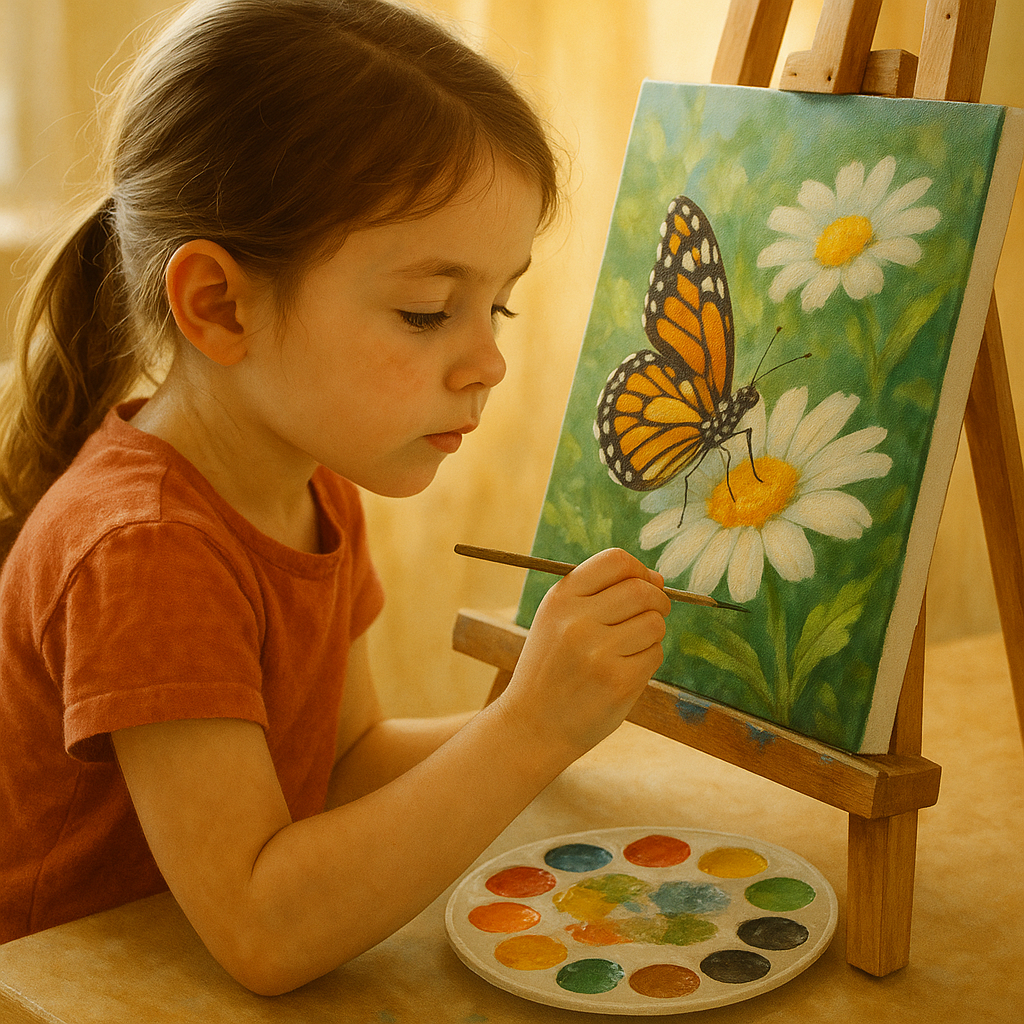
Offline Classes teach children to work with physical materials directly. They experience the texture of paper, the flow of watercolor, and the resistance of canvas. They learn to mix paints, clean brushes properly, and organize their workspace—practical skills that build independence and responsibility.
Online Classes introduce children to digital literacy alongside artistic skills. They learn to navigate learning platforms, use video conferencing tools, and sometimes work with digital art applications. They develop self-direction and time management as they set up their workspace independently and follow instructions through a screen.
Social Skills and Collaboration
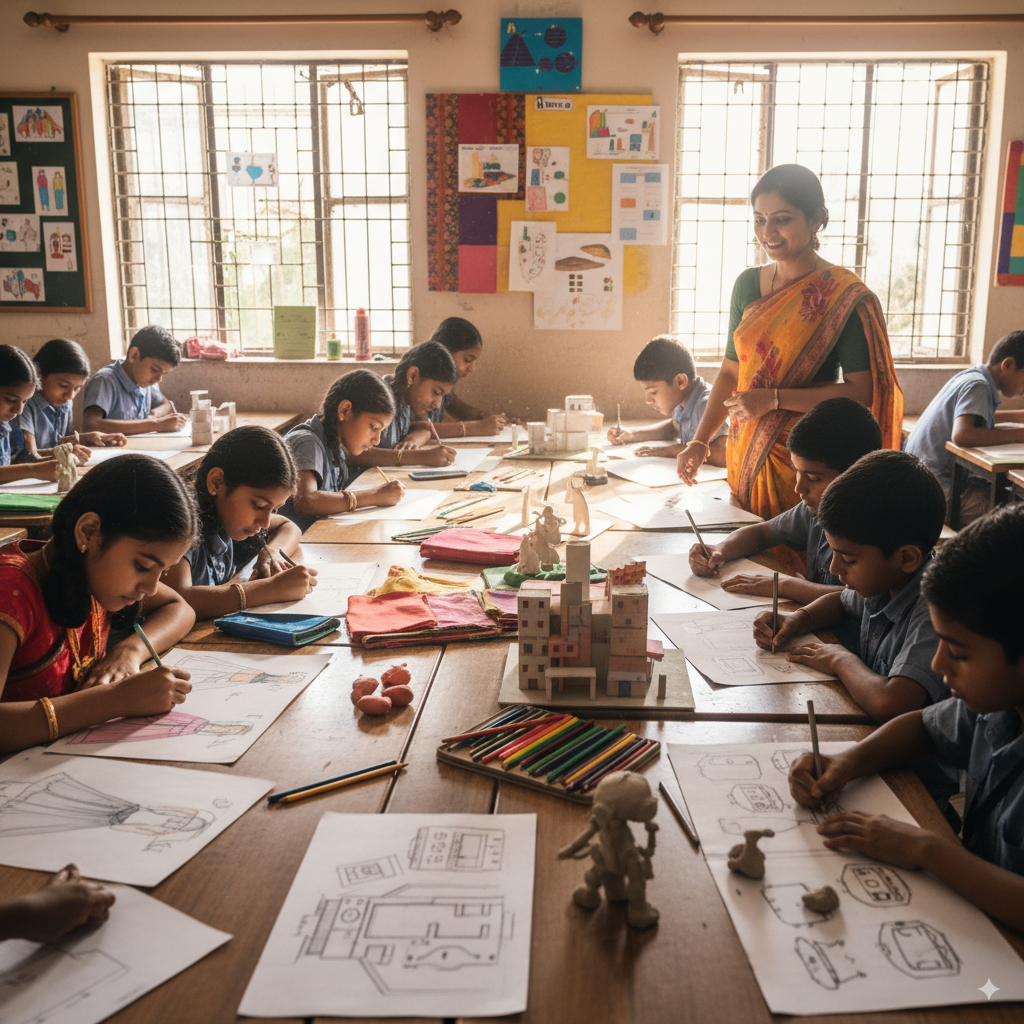
Art classes create communities of young creators. In offline settings, children work alongside peers, share materials, observe different approaches, and participate in group projects. They learn to give and receive constructive feedback, building communication skills and empathy.
Online classes foster community through different means—virtual breakout rooms, shared digital galleries, and group critiques via video. While the interaction style differs, children still develop social skills, learning to articulate their thoughts clearly and appreciate diverse artistic perspectives.
Patience, Discipline, and Work Ethic
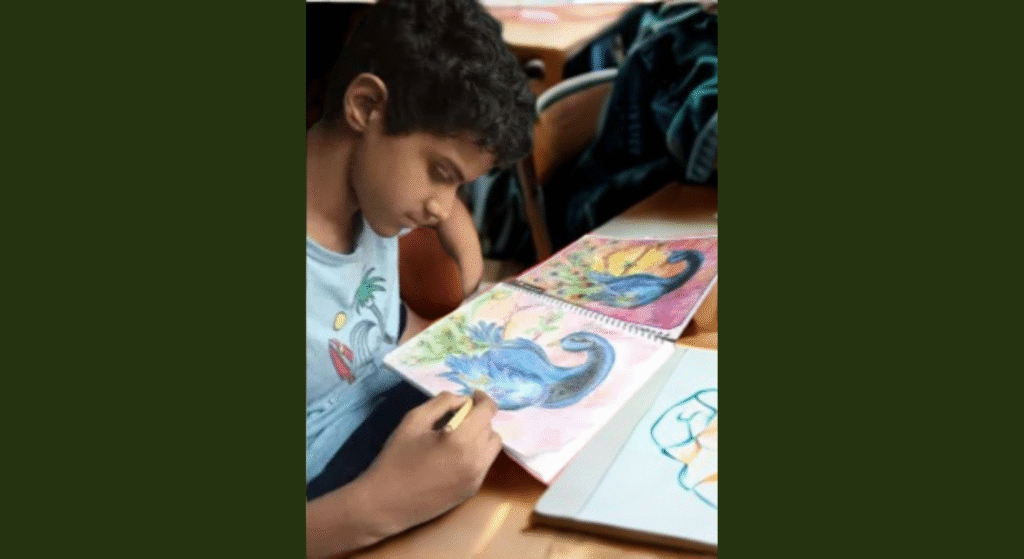
Creating art takes time. Children learn that worthwhile results require sustained effort, practice, and patience. They understand that skill development is gradual and that mastery comes through consistent practice rather than instant gratification.
Following step-by-step instructions, completing projects, and maintaining regular practice schedules build discipline and a strong work ethic. These habits serve children well in all areas of life, teaching them the value of dedication and perseverance.
Confidence and Self-Esteem
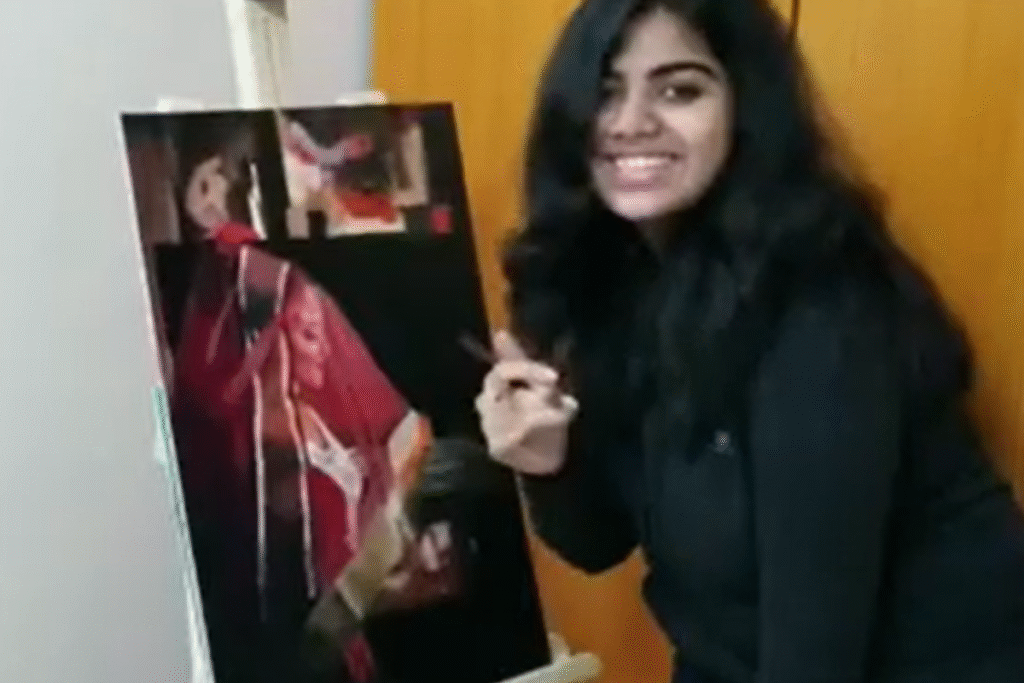
As children see their skills improve and complete finished artworks, their confidence grows. Each successful project reinforces their belief in their abilities. The tangible nature of art—having a physical or digital piece to show for their efforts—provides concrete evidence of their growth and achievement.
Art classes celebrate individual style and interpretation, teaching children that there are multiple “right” answers. This acceptance of diverse approaches builds self-esteem and encourages authenticity, helping children develop confidence in their unique perspectives.
The question isn’t whether online or offline art classes are superior—both formats offer valuable learning experiences. The best choice depends on individual circumstances, learning styles, and practical considerations. What remains constant is that structured art education, regardless of format, nurtures creativity, builds technical skills, and develops cognitive and emotional capacities that enrich children’s lives far beyond the art room.